Synchronizing Encryption Rotations with Vendor Onboarding Flows for Recurring Digital Wallet Charges Across Emerging Market Networks
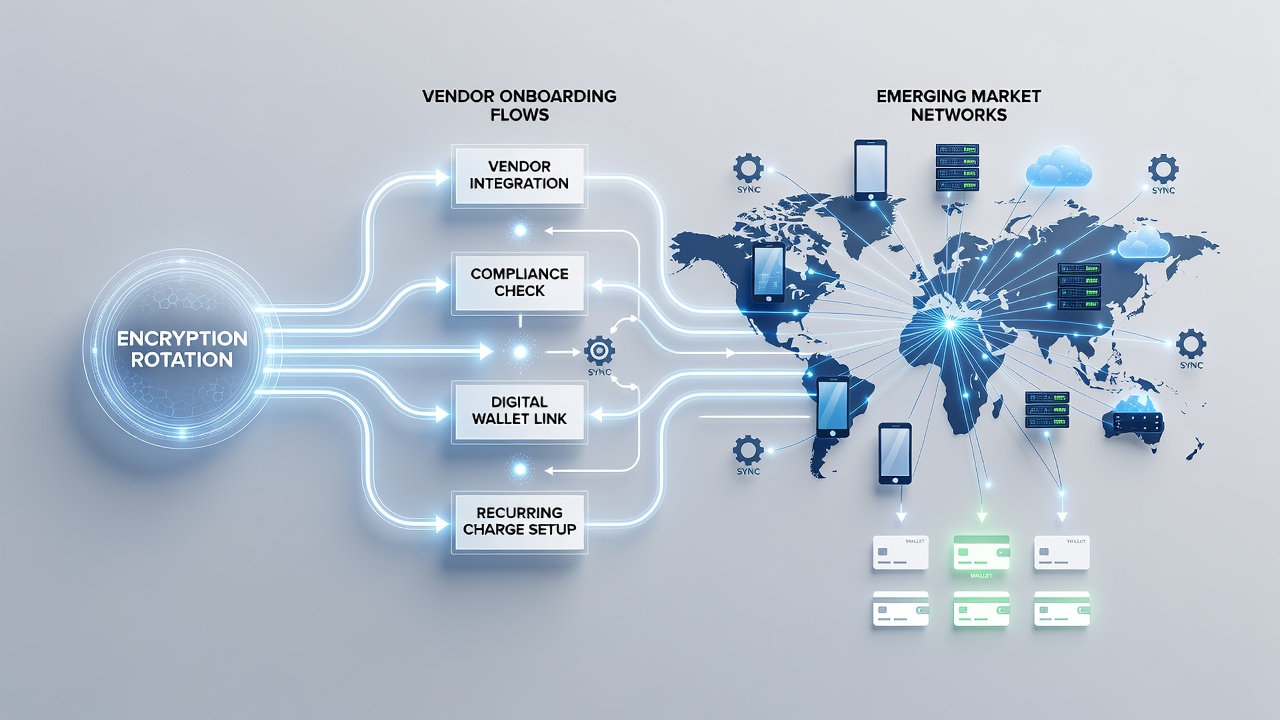
Payment processors in emerging economies coordinate encryption key rotations directly with vendor onboarding sequences to support recurring digital wallet charges, and this alignment reduces exposure windows during high-volume transaction periods. Networks in regions such as Southeast Asia, Latin America, and sub-Saharan Africa handle these flows through automated systems that trigger key updates when new vendors complete verification steps. Data from regional payment associations shows that synchronized processes cut key management incidents by measurable margins compared with staggered timelines.
Key Rotation Mechanics in Digital Wallet Systems
Encryption keys for digital wallet transactions follow defined lifecycles that typically span 90 to 180 days, while vendors enter networks through staged onboarding that includes identity checks, compliance documentation, and wallet linkage. Synchronization occurs when onboarding platforms signal key management services to generate fresh keys at the moment a vendor account activates for recurring billing. Observers note that this timing prevents legacy keys from protecting new charge cycles, and automated scripts execute the rotation without manual intervention from either side.
Systems achieve this linkage through API calls between vendor management portals and cryptographic modules, and the process incorporates timestamp verification to confirm that each rotation completes before the first recurring charge processes. Research from payment infrastructure studies indicates that such coordination supports compliance with standards like PCI DSS across multiple jurisdictions simultaneously.
Onboarding Sequences Tailored for Emerging Markets
Vendor onboarding in these networks incorporates mobile-first verification methods because many participants operate without fixed business addresses or traditional banking records. Steps include biometric matching, document upload via smartphone apps, and linkage to local mobile money providers before wallet integration occurs. Once these stages finish, the system initiates encryption rotation so that the new vendor's recurring charges begin under updated keys rather than inherited ones.
Networks in countries such as Kenya and Indonesia have documented reduced onboarding durations when rotation triggers activate automatically at the final verification milestone. Figures from industry reports reveal that this approach accommodates seasonal vendor influxes during harvest periods or festival cycles without creating gaps in encryption coverage.
Technical Integration Across Multi-Region Networks
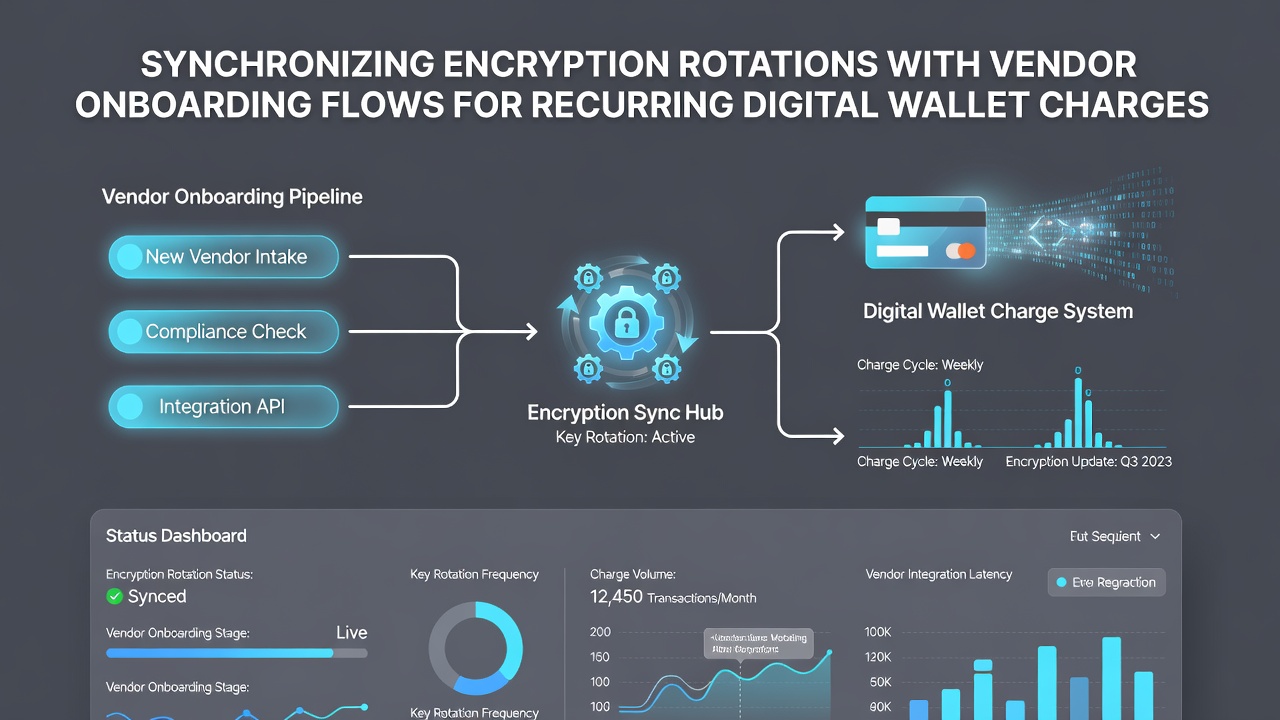
Cross-border digital wallet platforms route recurring charges through centralized gateways that maintain separate key sets per market while sharing a common orchestration layer. When a vendor in one market completes onboarding, the orchestration layer propagates rotation instructions to gateways serving adjacent regions that may handle the same user's wallet. This propagation uses encrypted channels and includes acknowledgment receipts to confirm successful updates before charges execute.
Operators schedule these events during low-traffic windows yet maintain 24-hour availability for time-sensitive vendor additions. As of July 2026, several networks plan to incorporate real-time rotation acknowledgments into their core protocols to further compress the interval between onboarding completion and first charge.
Compliance and Security Layer Alignment
Regulatory frameworks in emerging markets require documented key rotation records alongside vendor verification logs, and synchronized systems generate unified audit trails that satisfy multiple oversight bodies at once. Processors reference guidelines from organizations such as the World Bank when designing these combined reporting structures. The unified trails allow quick responses to queries from authorities in different countries without separate data pulls.
Security teams monitor rotation success rates alongside onboarding completion metrics, and dashboards display both sets of data on single screens. When a rotation fails during onboarding, the system pauses the vendor activation until the cryptographic step resolves.
Operational Outcomes Observed in Practice
Payment networks that adopted synchronized flows reported fewer encryption-related declines on recurring charges during the initial months of vendor activity. Case examples from Brazilian and Nigerian processors show that the method scales during rapid network expansions when thousands of new vendors join within short windows. Those who've studied these implementations find that the approach maintains transaction success rates even as charge volumes increase.
Conclusion
Synchronization of encryption rotations with vendor onboarding creates a single controlled sequence that supports secure recurring digital wallet charges in emerging market environments. Networks continue to refine these linkages through protocol updates and shared standards, and the resulting systems deliver consistent protection while accommodating the pace of vendor growth across diverse regions.