Sell Everywhere Seamlessly: Unified Platforms Bridging POS, Ecommerce, and Mobile Payments
Sell Everywhere Seamlessly: Unified Platforms Bridging POS, Ecommerce, and Mobile Payments
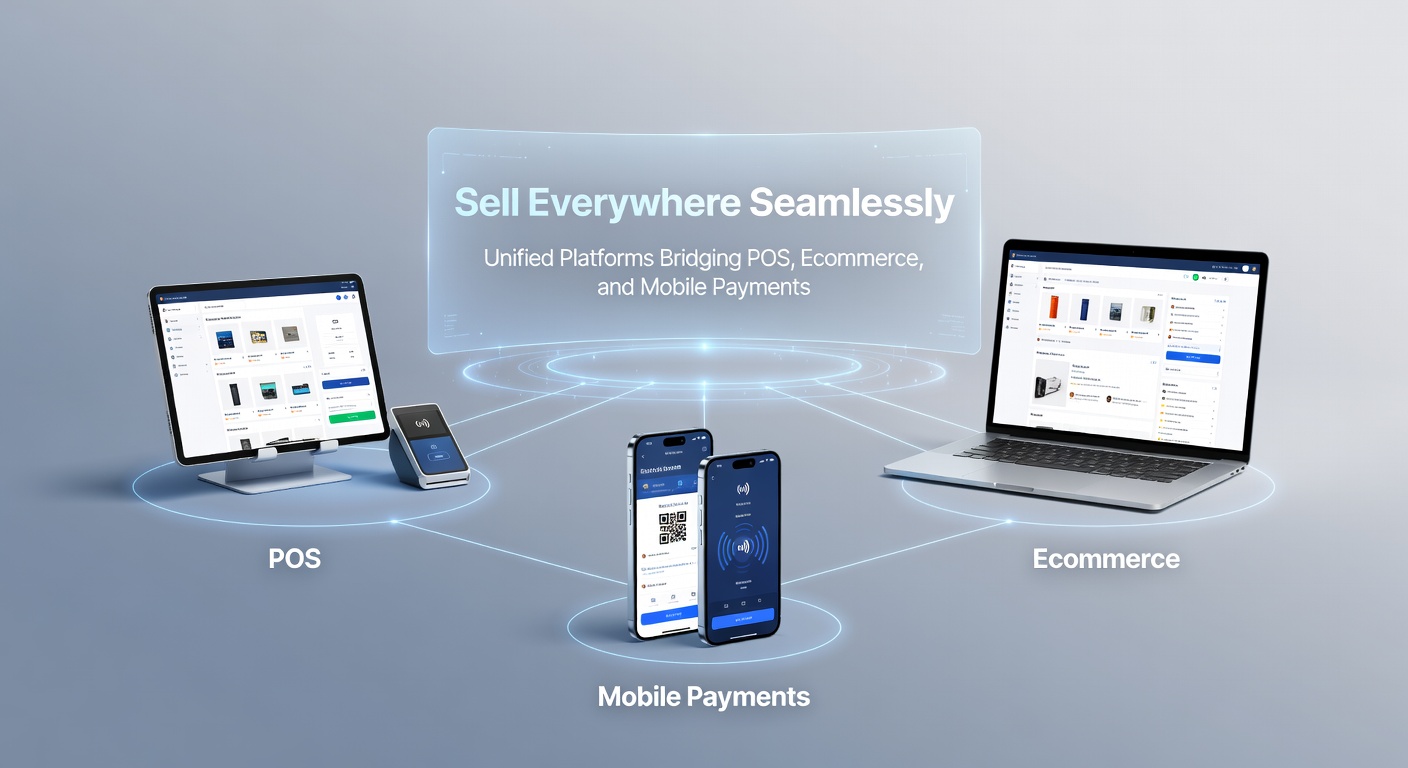
Businesses today face a fragmented landscape when it comes to accepting payments, yet unified platforms have emerged as game-changers, seamlessly integrating point-of-sale (POS) systems for brick-and-mortar stores, ecommerce setups for online sales, and mobile payment options for on-the-go transactions, all under one roof. These platforms, often powered by cloud-based technology, allow merchants to manage inventory, track sales, and process payments across channels without the headaches of juggling multiple vendors or syncing data manually. Data from industry reports shows that adoption of such unified solutions has surged by over 40% in the past two years, driven by consumer demand for consistent experiences whether shopping in person, online, or via apps.
The Rise of Omnichannel Payments
Omnichannel commerce isn't just a buzzword; it's the reality where customers expect to start a purchase on their phone, finish it in-store, and track it all effortlessly, and unified platforms make that possible by bridging POS hardware like countertop terminals with ecommerce plugins for platforms such as Shopify or WooCommerce, while also supporting mobile wallets like Apple Pay and Google Pay. Experts observe that this integration stems from advancements in APIs and real-time data synchronization, enabling a single customer profile to span all touchpoints. Take one retail chain that implemented such a system; sales across channels increased by 25%, according to their public case study, because inventory levels updated instantly whether a sale happened via POS scan or mobile checkout.
But here's the thing: traditional setups often led to overselling or stock discrepancies, since POS data sat in silos separate from online inventories, whereas unified platforms use centralized databases to reflect real-time availability, preventing those costly errors. Figures from a PCI Security Standards Council report highlight how these systems also bolster security by applying uniform encryption and tokenization across channels, reducing breach risks that plague disjointed operations.
Key Technologies Powering the Bridge
At the core lie robust APIs that connect POS devices from providers like Square or Clover with ecommerce backends, allowing transactions to flow bidirectionally; for instance, a customer buys online for in-store pickup, and the POS terminal immediately reserves the item while updating the online status. Machine learning algorithms further enhance this by predicting demand patterns across channels, helping merchants stock shelves based on combined online and in-store data. And mobile payments tie in via SDKs embedded in apps, where NFC chips on phones mimic POS swipes, ensuring speed and consistency.
- Real-time synchronization via cloud servers eliminates lag between channels.
- Unified reporting dashboards aggregate sales data, offering insights like peak hours for mobile versus POS.
- Scalable infrastructure handles spikes, such as Black Friday rushes blending online carts and in-store lines.
Real-World Examples and Case Studies
Consider a mid-sized fashion retailer in the US that switched to a unified platform in 2024; their POS systems now sync with Magento-based ecommerce and a custom mobile app, resulting in a 30% uptick in average order value because customers could apply loyalty points seamlessly across methods. Observers note similar outcomes for coffee shop chains, where baristas scan mobile orders placed via app right on the POS, cutting wait times and boosting throughput during lunch rushes. In Europe, grocers have leveraged these platforms to enable click-and-collect models, with data indicating fulfillment accuracy jumped to 98% post-integration.
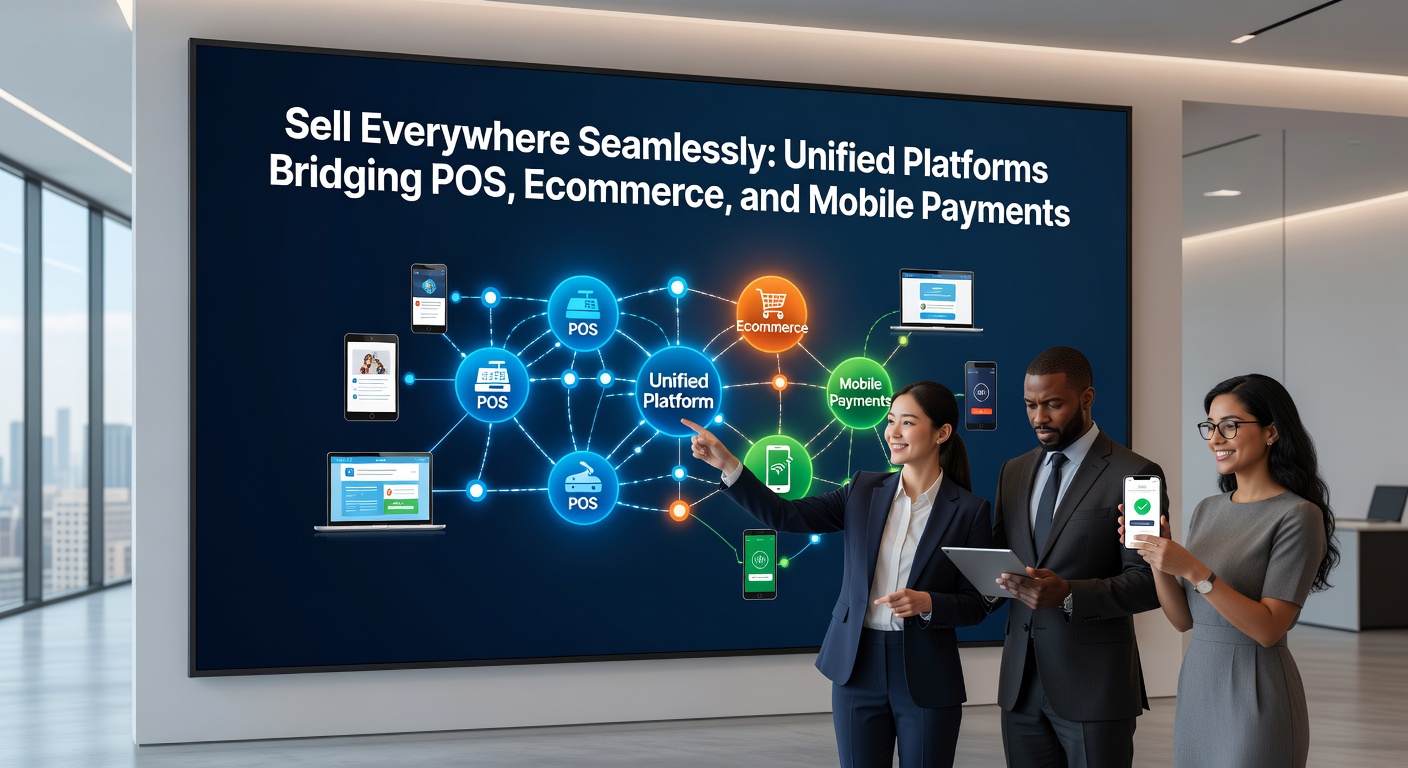
What's interesting is how small businesses benefit too; a boutique owner might use Lightspeed's unified system to process card taps at the counter, ship online orders via integrated fulfillment, and accept tap-to-pay on iPhones for pop-up markets, all feeding into one profit-and-loss report. Research from the Canadian Payments Association reveals that SMEs adopting these tools see operational costs drop by 15-20%, since they ditch multiple merchant accounts for a single, streamlined processor.
Global Adoption Trends
Around the world, adoption varies by market maturity; in Australia, platforms like Vend have unified POS with Xero accounting and ecommerce, supporting local payment methods like Afterpay alongside globals. Data shows Asia-Pacific leading with 55% of merchants unified by mid-2025, fueled by mobile-first cultures in countries like India and Indonesia. Yet challenges persist in regions with legacy systems, where upgrading POS hardware proves the biggest hurdle, although cloud hybrids allow gradual transitions without full overhauls.
Security and Compliance in Unified Ecosystems
Security remains paramount, as unified platforms consolidate data flows and thus amplify risks if not fortified properly, but built-in features like end-to-end encryption and PCI DSS Level 1 compliance address this head-on, with multi-factor authentication guarding admin access across channels. Turns out, breach incidents drop significantly—by up to 60% per some studies—when platforms enforce tokenization universally, swapping sensitive card data for unique identifiers that POS, web, and mobile all recognize without exposing originals.
Regulatory landscapes evolve too; in the EU, upcoming PSD3 directives set for April 2026 will mandate stronger open banking integrations within unified systems, pushing platforms to support account-to-account payments alongside cards, while in the US, the Fed's real-time payments rail RTP network gains traction for instant cross-channel settlements. Those who've studied this note that compliance becomes simpler with unified auditing trails, logging every transaction regardless of origin for swift regulator reviews.
Overcoming Common Hurdles
Integration snags crop up, especially with custom legacy POS, but most platforms offer plug-and-play modules or migration services to smooth the path; downtime during setup averages under 24 hours for cloud migrations. Cost structures vary—subscription models start at $50 monthly for basics, scaling with volume—yet ROI materializes quickly through reduced fees from single-processor negotiations. And support for emerging tech like buy-now-pay-later (BNPL) embeds natively, letting customers split payments whether at checkout or in-app.
Future Directions and Innovations
Looking ahead, AI-driven personalization will refine these bridges further, suggesting products based on cross-channel history while optimizing payment routing for lowest fees; by April 2026, expect widespread biometric integrations, with face or voice scans authenticating POS and mobile alike in high-traffic spots. Blockchain pilots for supply chain ties promise even tighter inventory-payment links, and 5G rollout accelerates mobile POS ubiquity, turning any smartphone into a till.
Industry forecasts predict unified platforms capturing 70% market share by 2028, as merchants prioritize frictionless experiences amid rising expectations. One study from Australian researchers underscores how these systems future-proof operations against channel shifts, like the post-pandemic boom in hybrid retail.

So platforms evolve not just to connect, but to anticipate, with edge computing minimizing latency for global enterprises spanning time zones.
Conclusion
Unified platforms have transformed payment processing from a patchwork into a cohesive strategy, enabling businesses to sell everywhere—be it countertop, cursor-click, or smartphone swipe—with data flowing freely and securely between POS, ecommerce, and mobile realms. As regulations like PSD3 roll out in April 2026 and tech advances accelerate, merchants equipped with these tools stand poised for growth, their operations humming efficiently across an ever-blending commerce landscape. The evidence points clearly: those bridging channels seamlessly don't just survive; they thrive in this omnichannel era.