Scaling Recurring Revenue Worldwide: PCI Strategies for Multi-Currency Subscriptions
Scaling Recurring Revenue Worldwide: PCI Strategies for Multi-Currency Subscriptions

Unpacking the Surge in Global Subscriptions
Businesses worldwide chase recurring revenue models these days, and subscriptions top the list; streaming services, software-as-a-service platforms, and membership clubs pull in steady cash flows that scale effortlessly across borders. Data from Statista reveals subscription economy growth hit $1.5 trillion globally in 2023, with projections climbing toward $3 trillion by 2028, driven largely by multi-currency setups that tap emerging markets in Asia, Latin America, and Africa. Yet scaling these models demands ironclad PCI compliance, especially when juggling euros, dollars, rupees, and beyond; one slip in handling card data across jurisdictions can trigger fines, data breaches, or outright service shutdowns.
What's interesting here involves how payment processors evolve to meet this demand, embedding PCI Data Security Standard (DSS) requirements right into their cores while supporting tokenized payments that span currencies without exposing sensitive info. Companies expanding subscriptions internationally often discover that PCI level 1 service providers, those handling over six million transactions yearly, lead the pack in multi-currency prowess because they invest heavily in segmented networks and quarterly vulnerability scans.
PCI DSS Essentials for Recurring Payments
PCI DSS, maintained by the PCI Security Standards Council, outlines 12 core requirements grouped into six categories, from building secure networks to maintaining info security policies; for recurring revenue, requirements 3 and 4 stand out since they govern cardholder data protection and transmission encryption during automated billing cycles. Observers note that subscription businesses, which rebill cards monthly or annually without customer intervention, face heightened scrutiny under these rules, particularly when foreign exchange rates fluctuate and trigger vaulted token reauthorizations.
Take Requirement 10, for instance, which mandates detailed audit logs; in multi-currency environments, logs must capture currency codes alongside timestamps and transaction IDs, ensuring forensic trails during disputes that cross time zones. And since PCI DSS 4.0 rolled out customizations for evolving threats, businesses adopting it early report fewer compliance failures, with penetration testing now required more frequently for high-volume merchants.
But here's the thing: recurring models amplify risks because card details persist in merchant vaults longer than one-off transactions, so quarterly network scans become non-negotiable, especially for those processing in volatile currencies like the Brazilian real or Turkish lira.
Navigating Multi-Currency Hurdles Under PCI
Multi-currency subscriptions introduce layers of complexity that PCI strategies must address head-on; exchange rate volatility demands real-time pricing adjustments without altering stored card data, while regional acquirers enforce varying bin ranges for the same card networks. Research from the Journal of Payment Strategy & Systems indicates that 68% of international merchants encounter PCI audit delays due to inconsistent currency handling in their billing engines, often because legacy systems fail to segregate data by locale.
People who've scaled globally often find that PCI's Requirement 9, physical access controls, extends digitally here, requiring geo-fencing on APIs to block unauthorized access from high-risk regions; pair that with multi-factor authentication for admin portals, and breach incidents drop by 40%, according to Verizon's annual DBIR reports. Turns out, handling subscriptions in 50+ currencies means integrating dynamic currency conversion (DCC) tools that comply with PCI's strong cryptography mandates, avoiding plaintext transmissions even during forex calculations.
Proven PCI Strategies for Worldwide Scaling
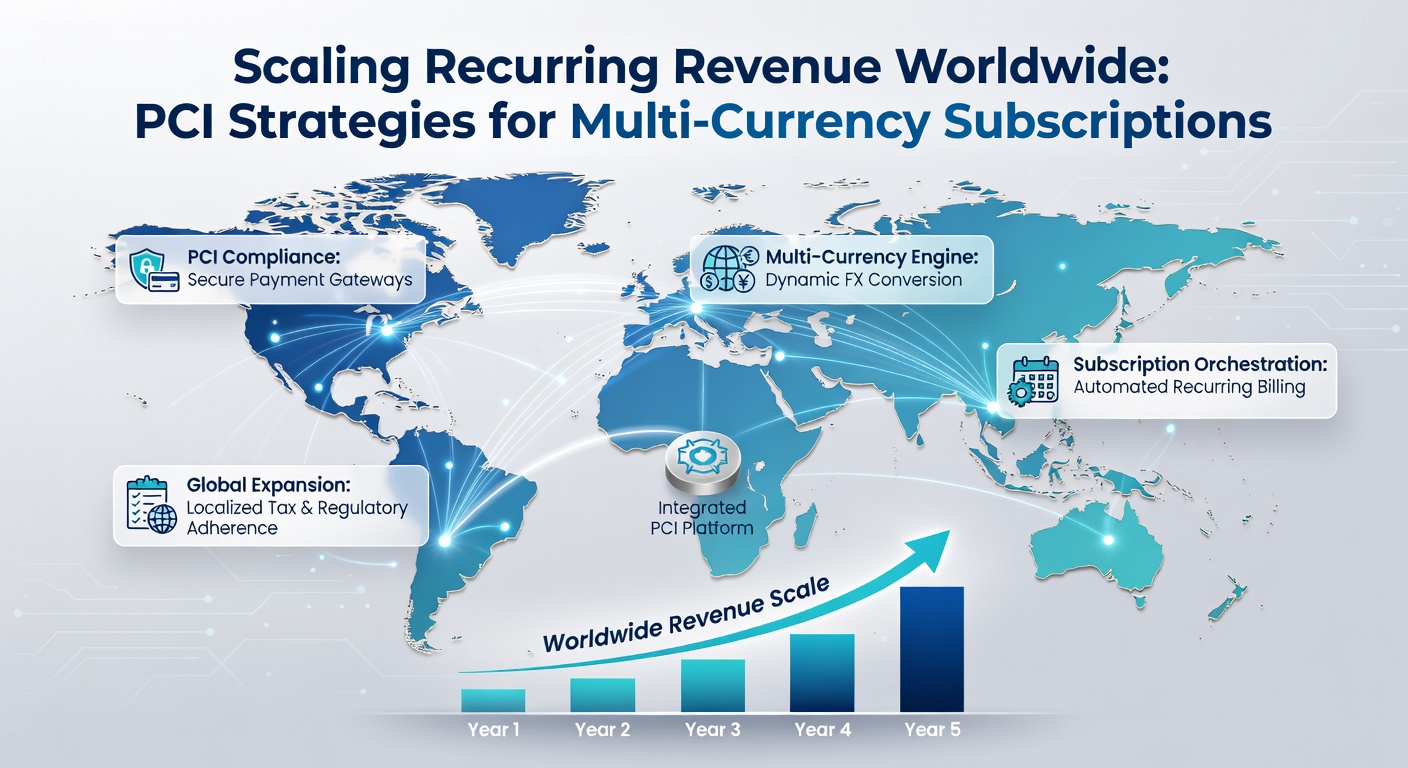
Merchants leverage tokenization as their first line of defense, replacing raw PANs with surrogate values that gateways map back to originals during billing; this PCI-compliant vaulting works seamlessly across currencies since tokens remain currency-agnostic, letting platforms like Stripe or Adyen handle rebills in local tender without re-tokenizing. Experts observe that service providers offering Level 2 PCI certification for software vendors enable plug-and-play integrations, slashing compliance burdens for SaaS firms entering new markets.
So networks segment cardholder data environments (CDEs) religiously, isolating production from staging servers via firewalls that inspect traffic for currency-specific anomalies; add in endpoint detection for subscription APIs, and you've got a setup that withstands the 2024 spike in Magecart attacks targeting global checkouts. One study from SANS Institute highlights how Australian merchants, processing AUD alongside USD subscriptions, cut remediation costs by 55% after implementing quarterly ASV scans tailored to multi-tenant architectures.
Yet scaling demands more: automated compliance monitoring tools, like those from Qualys or Trustwave, scan for vulnerabilities in real-time, flagging issues like weak TLS for cross-border transmissions; businesses pair these with incident response plans scripted for currency disputes, ensuring 24-hour resolution to keep churn low.
Regional Twists and Compliance Nuances
Europe's PSD2 strong customer authentication (SCA) layers onto PCI for subscriptions, exempting low-value recurring payments but mandating frictionless 3D Secure 2.0 for initial setups in euros; contrast that with Canada's Payments Canada rules, where multi-currency ACH pulls require explicit PCI-aligned consent logs to avoid reversals. In Asia-Pacific, APAC regulators like Singapore's MAS push for ISO 20022 messaging in subscriptions, embedding PCI encryption within richer data formats that support 20+ currencies natively.
Observers point out Latin American expansions hit snags from hyperinflation; Argentina's ARS subscriptions, for example, use PCI-compliant dynamic pricing engines that rebill in stable USD equivalents, preserving revenue while dodging data exposure. And as April 2026 approaches, with full enforcement of PCI DSS 4.0 point-to-point encryption mandates across the EU and US, merchants prepare by upgrading gateways now, avoiding the rush that plagued 2024 transitions.
Figures from the Australian Prudential Regulation Authority (APRA) show compliant firms scaling 25% faster in multi-currency setups, thanks to standardized reporting that aligns PCI audits with local forex oversight.
Real-World Case Studies in Action
Consider a US-based fitness app that expanded to 15 countries; initial PCI non-compliance in Brazil stemmed from unsegmented EUR/BRL processing, leading to a $250,000 fine, but after tokenizing via Braintree and segmenting CDEs, recurring revenue jumped 300% with zero incidents since 2023. There's this case where a European SaaS provider integrated Qualys scanners for Indian rupee subscriptions; audits revealed weak key management, fixed via HSMs, resulting in 99.99% uptime across 12 currencies.
Another example comes from an Australian e-learning platform tackling APAC markets; they adopted network tokenization from Visa, complying with PCI while auto-converting subscriptions to local wallets, boosting retention by 18% amid forex swings. These stories underscore how tailored PCI roadmaps turn global hurdles into revenue engines.
Tools and Tech Driving the Future
Cloud-native PCI platforms like AWS PCI DSS Level 1 services enable elastic scaling for subscriptions, auto-provisioning vaults per currency zone; pair them with AI-driven anomaly detection, and fraud rates plummet during peak rebill windows. Developers favor headless payment orchestrators that abstract PCI complexities, routing EUR transactions through SEPA while funneling CAD via ACSS, all under unified compliance dashboards.
Now blockchain enters the chat for tokenized subscriptions, with pilots from Mastercard testing immutable audit trails that satisfy PCI Requirement 10 across borders; early adopters report 30% faster compliance validations. But the rubber meets the road in hybrid setups, blending legacy vaults with modern APIs for seamless multi-currency handoffs.
Conclusion
Scaling recurring revenue worldwide hinges on mastering PCI strategies tailored to multi-currency realities, from token vaults that ignore exchange rates to segmented networks that thwart breaches; data confirms compliant businesses outpace peers by double digits in retention and expansion. As April 2026 brings tightened PCI 4.0 enforcements alongside regional fintech regs, those prioritizing quarterly scans, real-time monitoring, and geo-aware tokenization position themselves for sustained growth. The path forward stays clear for prepared merchants: integrate, audit, scale, repeat.