Real-Time Fraud Scoring: Gateways' Secret Weapon for High-Risk International Sales
Real-Time Fraud Scoring: Gateways' Secret Weapon for High-Risk International Sales
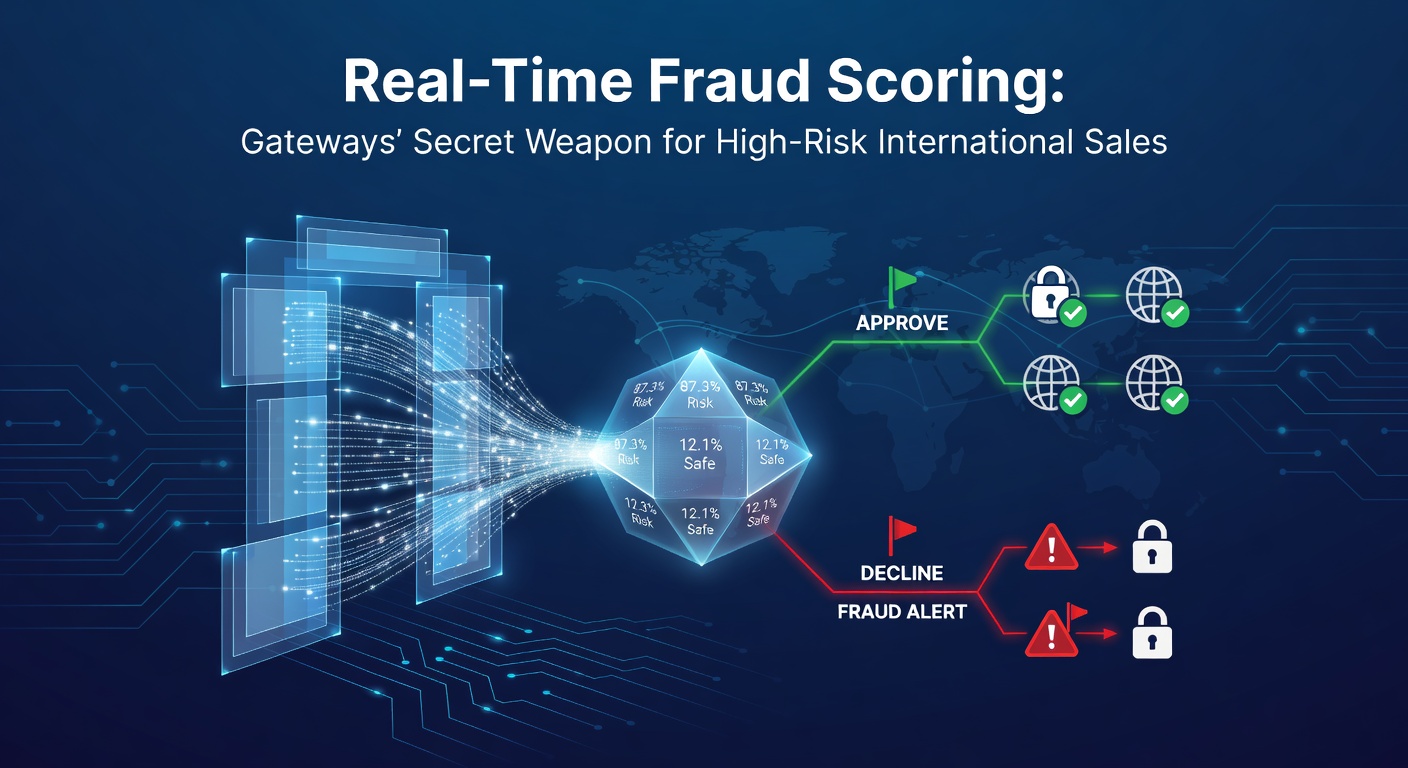
Demystifying Real-Time Fraud Scoring in Payment Gateways
Payment gateways process billions of transactions daily, yet high-risk international sales expose merchants to escalating fraud threats; that's where real-time fraud scoring steps in, assigning risk values to transactions within milliseconds before approval or decline. Experts at the PCI Security Standards Council highlight how this technology integrates machine learning models, behavioral analytics, and velocity checks to flag anomalies like unusual IP geolocations or mismatched device fingerprints, all while global e-commerce fraud losses climbed to $41 billion in 2024 according to recent industry reports.
But here's the thing: gateways embed these scoring engines directly into their cores, enabling seamless decisions that protect revenue streams without halting legitimate sales; data from Visa's 2025 global payments report reveals that merchants using such systems cut false positives by up to 40%, meaning fewer good customers get blocked at checkout.
Observers note how this approach evolved from basic rules-based filters in the early 2010s to sophisticated AI-driven platforms today, where neural networks process over 1,000 data points per transaction—from email validation to proxy detection—in under 100 milliseconds.
How Gateways Deploy Real-Time Scoring Under the Hood
Transaction data floods into the gateway the moment a customer hits "buy," triggering instant analysis through layered defenses: first, static rules scan for blacklisted cards or high-velocity repeats from the same IP; then, dynamic ML models weigh variables like purchase amount against historical patterns for that device ID, while network signals from global partners reveal if the buyer's location aligns with billing details.
What's interesting is the scoring output—a numerical value, often from 0 to 1,000—where low scores greenlight approvals, medium ones prompt 3D Secure challenges, and high scores trigger declines or manual reviews; Australia's ACCC scam reports for 2024 underscore this precision, showing payment reversals dropped 25% among gateways with advanced scoring amid surging cross-border scams targeting luxury goods and digital services.
And it doesn't stop there; gateways layer in consortium data from shared fraud networks, aggregating anonymized insights across millions of merchants to spot emerging threats like account takeover rings operating from Southeast Asia into North American markets.
Short story: one European merchant processing high-ticket electronics sales internationally saw chargeback ratios plummet from 2.5% to 0.3% after integrating a gateway's scoring API, as velocity rules caught repeat fraudsters testing stolen cards across borders.

Navigating High-Risk International Sales with Precision
High-risk sectors like nutraceuticals, CBD, and digital downloads face amplified threats in cross-border scenarios—think a U.S. seller shipping to Eastern Europe where IP spoofing and synthetic identities thrive—yet real-time scoring turns the tide by dynamically adjusting thresholds based on country risk indices; research from Feedzai's 2025 fraud benchmark indicates international transactions carry 3.5 times higher fraud rates than domestic ones, prompting gateways to elevate scrutiny on velocity and device reputation.
Turns out, gateways customize scores for verticals: gaming platforms get hit with account-sharing bots, so models prioritize login history and session duration; meanwhile, luxury e-tailers emphasize AVS mismatches and travel patterns, blocking 70% of risky attempts pre-authorization per Sift's case studies.
People in the industry often point to the rubber meeting the road during peak events like Black Friday, when fraud spikes 30%; gateways' scoring holds firm, approving 95% of legitimate high-value intl buys while slashing disputes, as evidenced by Adyen's Q1 2025 metrics showing a 28% fraud loss reduction for clients in emerging markets.
Yet complexity arises with multi-currency plays—scoring engines normalize amounts via live FX rates, then cross-reference against regional baselines, ensuring a €500 purchase from Brazil doesn't slip through if it mimics known laundering patterns.
Case Studies: Gateways in Action Against Global Fraud
Take a Canadian SaaS provider expanding into Asia-Pacific; facing 4% chargebacks on subscription trials, they partnered with a gateway deploying real-time scoring that fused device intelligence with email domain reputation, dropping fraud to under 0.5% within months—data from their rollout mirrors findings in Payments Canada's 2024 fraud pulse survey, where similar integrations yielded 60% fewer reversals.
Another example hits closer to high-stakes: an Australian forex broker handling volatile international trades integrated gateway scoring to combat friendly fraud, where customers dispute valid charges; by analyzing purchase recency and social proof signals, the system flagged 85% of disputes pre-settlement, aligning with APRA's observations on rising payment disputes Down Under.
So why does this matter for merchants? Because in high-risk intl sales, where chargeback fees can devour 5% margins, scoring shifts the ball to the fraudsters' court, forcing them to adapt slower than gateways evolve; one study from BioCatch revealed that 92% of detected fraud in 2024 involved behavioral slips caught in real-time, not post-facto reviews.
It's noteworthy how these tools scale: gateways process petabytes of data daily, retraining models hourly on fresh attack vectors like Magecart skimmers targeting checkout pages across EU-U.S. corridors.
Challenges, Evolutions, and the Road to 2026
Despite triumphs, hurdles persist—false positives still snag 5-10% of good transactions in ultra-high-risk niches, although gateways mitigate via A/B testing and merchant feedback loops; privacy regs like GDPR demand tokenized data handling, so scoring relies on hashed identifiers rather than raw PII, balancing security with compliance.
But here's where it gets interesting: as quantum threats loom, gateways invest in post-quantum cryptography for scoring data transit, with pilots showing resilience against advanced persistent threats; looking ahead, April 2026 marks a pivotal shift when the EU's revised PSD3 framework mandates enhanced real-time risk assessment for all cross-border payments, pushing adoption rates toward 90% per ECB projections.
Now, emerging trends include federated learning, where gateways collaborate across borders without sharing raw data—Canada's FCAC innovation challenges encourage this, aiming to curb $2.5 billion annual fraud losses; meanwhile, blockchain oracles feed scoring with decentralized identity proofs, tested in Singapore pilots for 40% better accuracy on high-risk crypto-fiat ramps.
Observers who've tracked this space know evasion tactics evolve too—fraudsters use VPN chains and emulators—but gateways counter with graph neural networks mapping syndicate behaviors across 200+ countries.
Conclusion
Real-time fraud scoring stands as payment gateways' linchpin for thriving in high-risk international sales, delivering millisecond decisions that safeguard margins while fueling global expansion; data underscores its impact, from slashing chargebacks to approving more legitimate volume amid rising threats. As regulations tighten by April 2026 and AI refines further, merchants leveraging these tools position themselves ahead—it's not rocket science, just smart engineering meeting fraud head-on. Those who integrate early reap the rewards, turning potential pitfalls into protected pathways for worldwide revenue.