Navigating Overlaps Between Handheld Device Validation Periods and Recurring Charge Timelines for Mobile Vendors Operating Across Multiple Regions
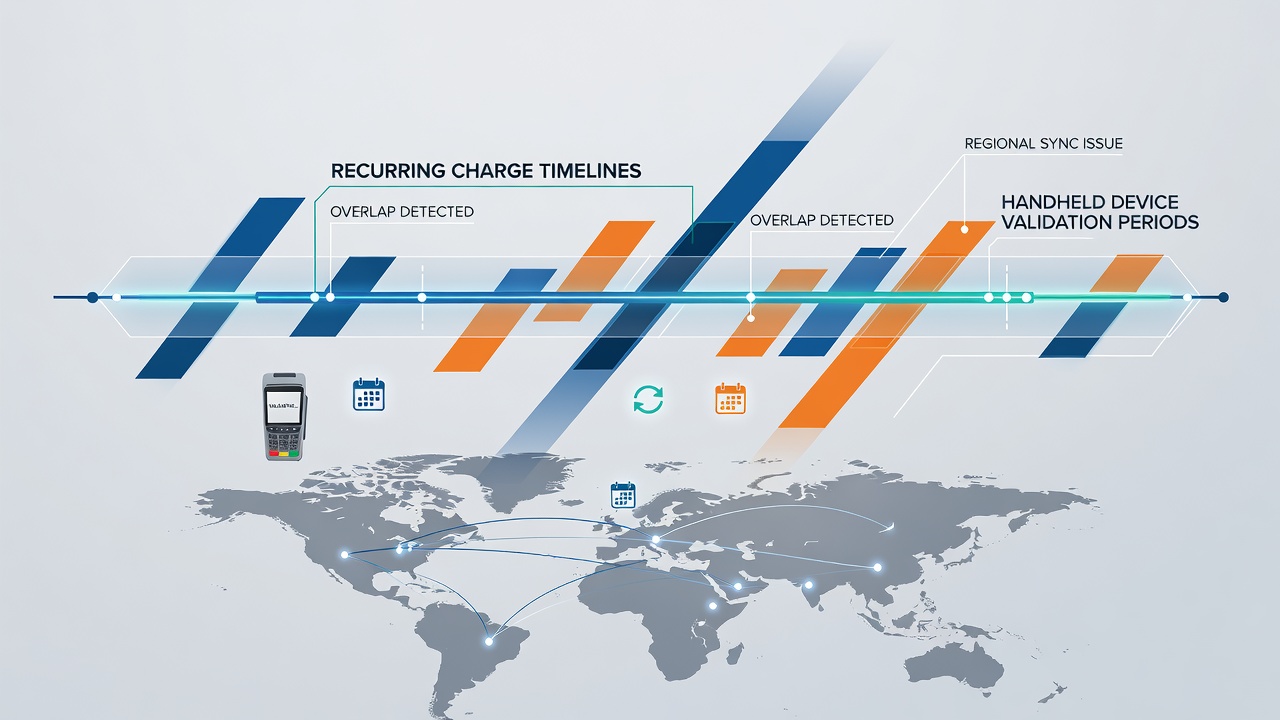
Handheld device validation periods intersect directly with recurring charge timelines when mobile vendors process subscriptions across borders, and this intersection creates scheduling demands that require precise coordination of certification deadlines and billing cycles. Device validation covers PCI DSS compliance checks, EMV terminal certifications, and regional security audits that typically run on 12- to 36-month intervals depending on the jurisdiction, while recurring charges operate on fixed monthly or quarterly cycles that generate authorization requests through the same portable hardware.
Core Components of Device Validation Schedules
Validation timelines for handheld units begin with initial certification under standards set by the PCI Security Standards Council, after which vendors must complete renewal audits before the certificate lapses. In the European Union the European Central Bank tracks terminal compliance through its oversight framework, requiring updates whenever encryption protocols or software versions change, whereas Canadian regulators align similar requirements with the Bank of Canada’s retail payment guidelines. These periods rarely align naturally with subscription renewal dates, so vendors track both calendars in centralized systems that flag upcoming expirations months in advance.
Recurring Charge Timelines and Their Operational Demands
Recurring billing cycles depend on stable device authorization pathways because each renewal triggers a new payment request that must pass through certified hardware. When a handheld terminal approaches the end of its validation window, any delay in recertification can interrupt the authorization sequence for active subscriptions. Data from payment processors shows that vendors operating in three or more regions experience at least two validation events per year that fall within active billing periods, creating brief windows where hardware must either receive updated certificates or route transactions through backup channels.
Regional Differences That Affect Overlap Management
Asia-Pacific markets introduce additional variables because countries such as Singapore and Australia maintain their own certification bodies with staggered renewal windows. The Monetary Authority of Singapore requires annual device inspections for wireless terminals used in subscription services, while Australian rules tie validation to the Australian Securities and Investments Commission’s ePayments Code updates. These staggered deadlines mean a vendor serving customers in both the EU and Australia may face validation tasks in consecutive quarters even though billing cycles remain constant.
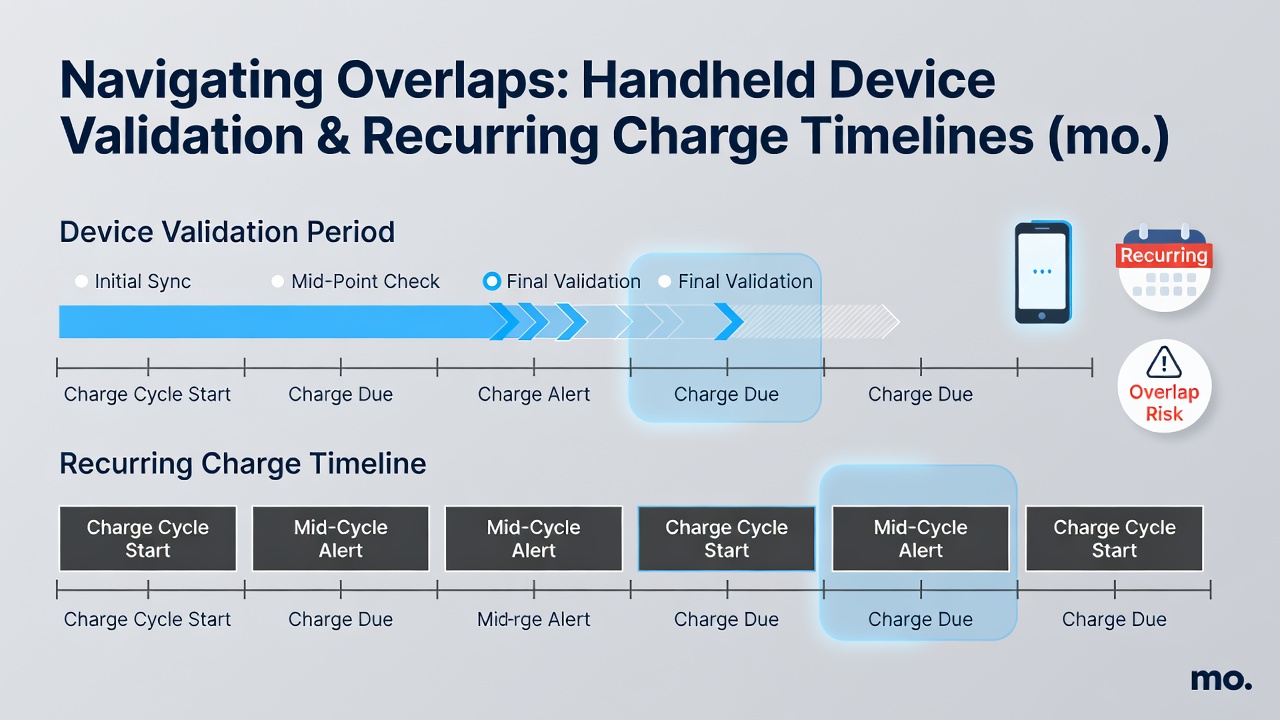
July 2026 marks the scheduled rollout of updated EMV contactless specifications in several markets, and vendors have already begun mapping how the new requirements will overlap with existing subscription renewal dates. Processors report that preemptive certificate renewals scheduled for the first half of 2026 reduce the risk of mid-cycle interruptions when the updated specifications take effect.
Coordination Strategies Used by Multi-Region Vendors
Vendors coordinate these timelines by maintaining a master compliance calendar that lists every device certificate expiration alongside the renewal dates of active subscriptions. Automated alerts trigger 90 days before any validation deadline so that testing and documentation can occur without pausing billing operations. Some operators batch recertification tasks across regions by grouping devices that share similar hardware models, thereby completing multiple validations during a single audit cycle rather than handling each jurisdiction separately.
When overlaps become unavoidable, vendors shift high-volume subscription traffic to secondary certified terminals or cloud-based authorization routes that do not rely on the device under review. This approach maintains transaction flow while the primary handheld units complete required security checks and receive new certificates.
Documentation and Record-Keeping Requirements
Accurate records link each validation event to the specific recurring charge authorizations processed during that period. Regulatory bodies in multiple regions request these logs during periodic reviews, and vendors who maintain integrated timestamped entries satisfy requests more quickly. Electronic audit trails that connect certificate issuance dates with authorization logs provide the traceability needed when compliance questions arise after a billing cycle has closed.
Conclusion
Effective navigation of validation periods and recurring charge timelines rests on synchronized calendar management, early preparation for regulatory changes such as the July 2026 specification updates, and flexible routing options that keep subscription processing uninterrupted. Vendors who integrate these elements across regions maintain continuous compliance while preserving steady revenue streams from recurring billing.