Mapping Interdependencies Between Digital Wallet Integrations and Automated Vendor Settlements Across Multiple Jurisdictions
Written by Ulrich Perry · Aug 8, 2026
Mapping Interdependencies Between Digital Wallet Integrations and Automated Vendor Settlements Across Multiple Jurisdictions
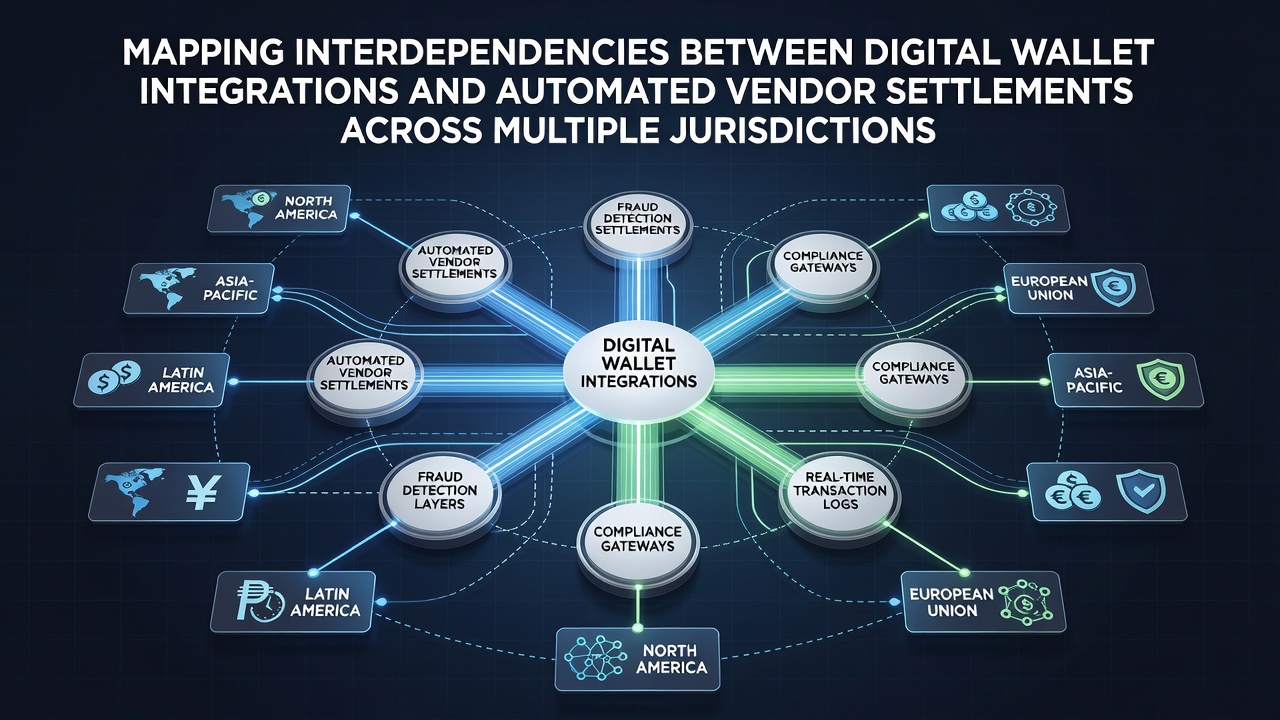
Digital wallet integrations connect consumer payment apps directly to merchant accounts while automated vendor settlements handle the transfer of funds from those accounts to suppliers and service providers, and the interdependencies between these systems become especially complex when operations span multiple jurisdictions with differing regulatory frameworks, data standards, and currency rules. Observers note that wallet providers must synchronize authentication protocols with settlement engines to ensure funds move without delays, yet variations in how each jurisdiction defines transaction finality create mapping challenges that require detailed dependency charts. Research indicates these charts track API calls, compliance checks, and reconciliation steps that link wallet authorization events to batch settlement triggers.
Core Integration Points in Digital Wallet Systems
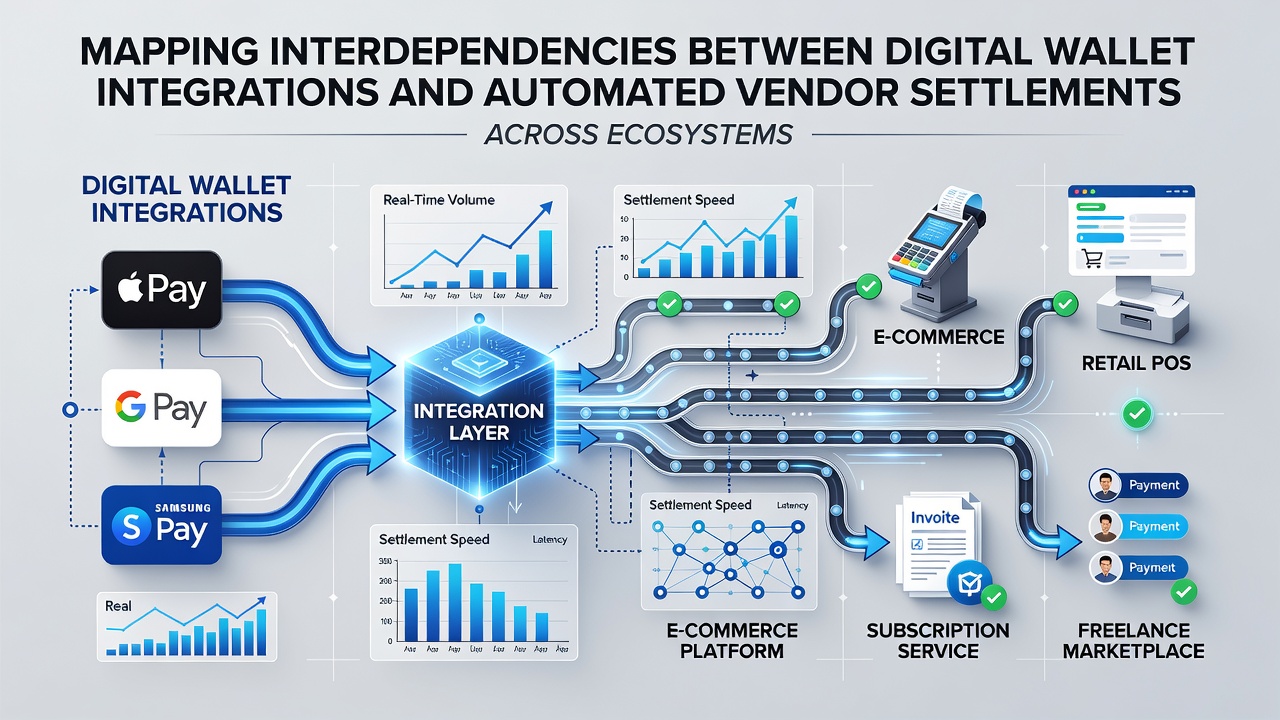
Wallet platforms such as those operated by major technology firms exchange tokenized card data and account identifiers with merchant processors, and this exchange feeds directly into settlement modules that calculate vendor payouts based on completed sales. Experts have observed that the timing of wallet confirmations influences when settlement batches release, because many automated systems wait for successful authorization codes before initiating transfers to vendors. Data from cross-border pilots shows that delays in one jurisdiction's wallet verification can cascade into postponed payouts in another, prompting operators to build conditional logic that pauses or accelerates settlements according to real-time status updates.
Regulatory Variations Across Jurisdictions
European rules require explicit consent logs for each wallet transaction before settlement can proceed, whereas certain Asia-Pacific frameworks emphasize source-of-funds verification at the settlement stage, and these differences force mapping exercises to include jurisdiction-specific checkpoints within shared workflows. According to guidance from the European Central Bank, operators must document how wallet data fields map to settlement records to satisfy audit trails, while Australian Treasury reports highlight similar requirements for multi-currency handling that affect automated disbursement timing. Those who've studied these patterns find that mapping tools often incorporate regulatory calendars so that updates scheduled for August 2026 in several regions can be synchronized without disrupting ongoing vendor payments.
Dependency Mapping Techniques
Teams construct flow diagrams that connect wallet integration events such as device binding and biometric approval to settlement actions including currency conversion and vendor account crediting, and these diagrams use directed graphs to illustrate which steps depend on prior confirmations. One study revealed that when a wallet integration in one country requires additional fraud screening, the linked settlement in a neighboring jurisdiction must incorporate matching data fields or risk rejection by local clearing houses. Researchers discovered that effective maps include fallback paths, allowing systems to reroute settlements through alternative processors when primary wallet channels encounter outages.
Technical Synchronization Requirements
API endpoints for wallet integrations must return standardized status codes that settlement engines can interpret instantly, and middleware layers translate jurisdiction-specific formats into common schemas that automated payout systems recognize. Observers note that encryption key exchanges between wallet providers and settlement platforms occur at defined intervals to maintain security while permitting continuous operation, yet mismatches in key rotation schedules across borders have led some operators to implement staggered update sequences. Figures reveal that successful mappings reduce reconciliation discrepancies by aligning timestamp formats and currency codes at the point of wallet authorization rather than after settlement has begun.
Case Examples from Global Operations
Take one logistics company that integrated wallet payments for its vendor network spanning North America and Europe; the firm mapped wallet confirmation events to settlement triggers so that supplier invoices cleared within the same business day regardless of originating currency. There's this case where experts found that a Southeast Asian marketplace adjusted its automated vendor payouts to accommodate wallet providers' regional data residency rules, resulting in parallel settlement queues that prevented cross-jurisdiction data conflicts. People who've examined these implementations often discover that dependency maps become living documents updated whenever new wallet features or settlement regulations emerge.
Future Alignment Considerations
Operators continue to refine their dependency maps as new wallet features such as instant peer-to-peer transfers enter settlement workflows, and regulatory bodies in multiple regions signal forthcoming alignment on data portability standards that could simplify these connections. What's interesting is how August 2026 deadlines for certain reporting enhancements may prompt additional layers in existing maps, requiring vendors to supply extra identifiers that wallet systems must pass through to settlement engines without breaking automation. Research indicates that organizations maintaining detailed interdependency records experience fewer disruptions when jurisdictions introduce updated compliance requirements.
Conclusion
Mapping the interdependencies between digital wallet integrations and automated vendor settlements across multiple jurisdictions demands precise tracking of data flows, regulatory checkpoints, and technical timing sequences, and organizations that maintain these maps position themselves to handle evolving requirements while keeping vendor payments consistent. Evidence suggests continued refinement of these mapping practices will support smoother operations as digital payment channels expand globally.