Linking Data Reconciliation Processes to Compliance Checks in Expanding Online Payment Systems for Worldwide Merchants
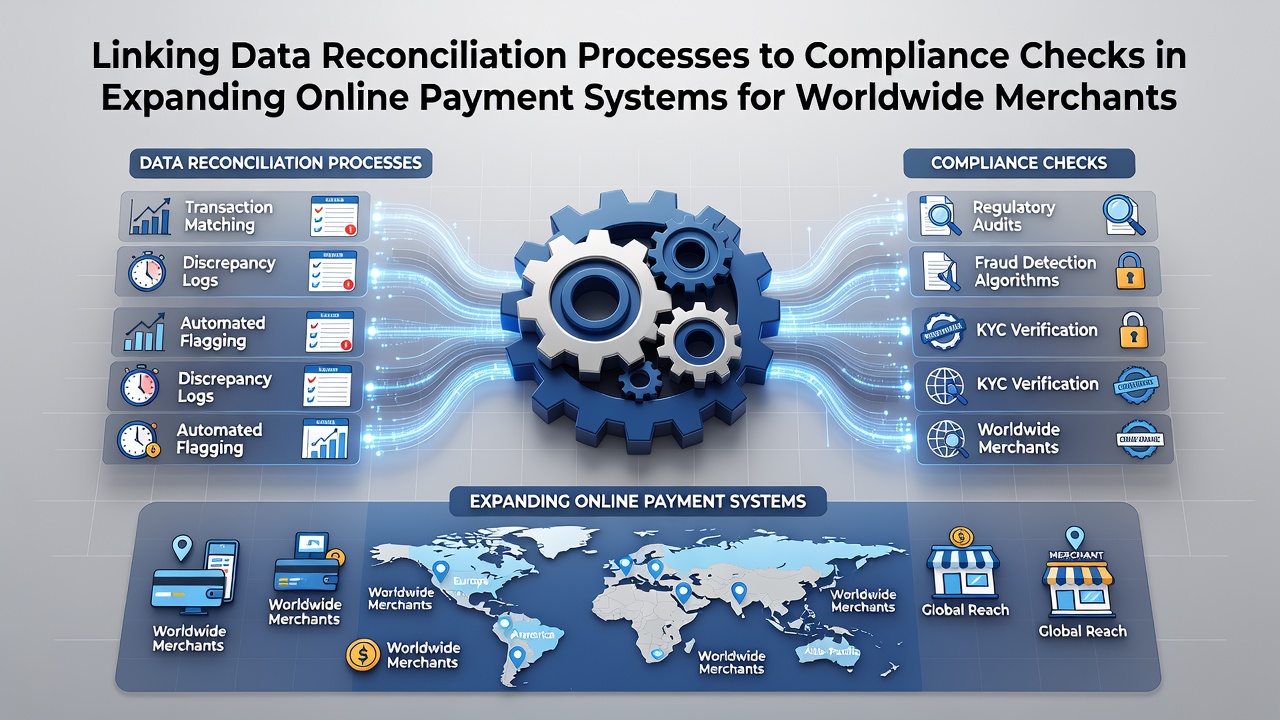
Merchants operating across multiple regions rely on data reconciliation to match transaction records against bank settlements, and this process now connects directly to compliance verification steps in expanding online payment platforms. Systems track every authorization, capture, and refund while running automated checks against regulatory requirements such as anti-money laundering rules and data protection standards. Observers note that these linked workflows help identify discrepancies before they trigger audits or penalties, particularly as transaction volumes rise in markets from North America to Asia-Pacific.
Core Elements of Reconciliation in Payment Flows
Data reconciliation begins when payment gateways log each transaction detail, including amount, currency, merchant identifier, and timestamp, then compares those entries against incoming funds from acquirers. Automated scripts flag mismatches in fees, foreign exchange rates, or declined authorizations, allowing teams to investigate within hours rather than days. Research from the Bank for International Settlements indicates that platforms handling cross-border volumes above $50 million monthly achieve 98 percent match rates when reconciliation runs continuously instead of at end-of-day batches. Those same systems feed the matched records into compliance modules that scan for patterns matching sanctioned entities or unusual velocity thresholds.
Integration Points Between Reconciliation and Compliance
Compliance checks activate at multiple stages during reconciliation cycles. First, the system validates that every reconciled batch carries required customer verification data under know-your-customer frameworks. Next, it cross-references merchant category codes against restricted lists maintained by regional regulators. When July 2026 updates to the European Union's revised Payment Services Directive take effect, platforms must demonstrate that reconciliation outputs include audit trails proving adherence to strong customer authentication rules. This requirement pushes vendors to embed compliance logic directly inside reconciliation engines so that any unmatched entry immediately triggers a secondary review queue.
One study from the University of Melbourne's Centre for Business Analytics found that Australian merchants using unified reconciliation-compliance dashboards reduced manual review time by 42 percent compared with separate legacy tools. The same research showed fewer false positives in fraud alerts because reconciled data already filtered out timing differences caused by time-zone variances.
Handling Multi-Currency and Regulatory Variations
Worldwide merchants encounter distinct reporting calendars, tax treatments, and data retention periods depending on the jurisdictions where customers reside. Reconciliation engines now incorporate jurisdiction-specific rulesets that map each transaction to the correct compliance framework before settlement files generate. For instance, Canadian goods and services tax calculations must align with reconciled settlement amounts before files reach the Canada Revenue Agency, while similar steps apply for Australian GST obligations. Platforms achieve this by maintaining a rules engine that updates automatically when new guidance appears from bodies such as the Australian Securities and Investments Commission.
Technical Architecture Supporting the Linkage
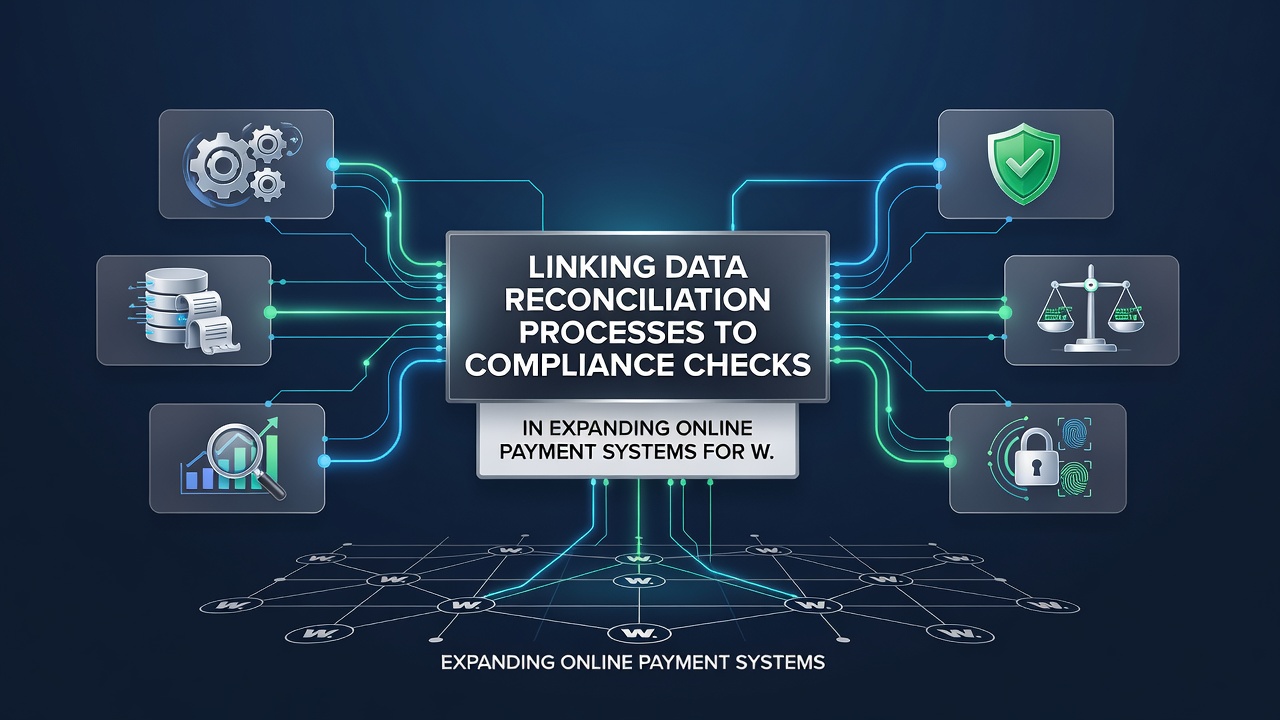
Modern architectures rely on event-driven pipelines where each payment event publishes to a central ledger that both reconciliation and compliance services consume. Apache Kafka or equivalent streaming platforms carry the messages, and downstream microservices apply matching algorithms alongside rule-based compliance filters. Encryption at rest and in transit satisfies data protection mandates while allowing near-real-time queries. Observers at the PCI Security Standards Council note that tokenization of primary account numbers during these flows reduces scope for assessments because sensitive data never persists in reconciliation tables. PCI Security Standards Council documentation outlines how such tokenization integrates with settlement reporting without breaking audit chains.
Operational Workflows Observed in Practice
Teams at expanding merchants typically run nightly reconciliation jobs that produce exception reports by morning. Compliance analysts then receive prioritized lists of items needing documentation, such as high-value transfers lacking complete originator information. Automated alerts route these cases to regional compliance officers who apply local thresholds. In one documented rollout across 14 countries, a single platform cut reconciliation exceptions by 35 percent after linking the two processes, according to internal metrics shared at industry forums. The reduction occurred because compliance flags surfaced data gaps early enough for merchants to request missing details from customers before monthly reporting deadlines.
Scaling Considerations for Global Growth
As merchant footprints widen, the volume of reconciliation records grows exponentially, requiring horizontal scaling of both storage and compute resources. Cloud providers offer managed services that apply compliance policies at the infrastructure layer, ensuring that logs remain immutable for required retention periods. Data residency rules in markets such as Singapore and Brazil force some platforms to maintain regional instances while still feeding aggregated, anonymized metrics to a global compliance dashboard. This hybrid model preserves the linkage between reconciled figures and regulatory submissions without violating localization statutes.
Conclusion
Linking data reconciliation directly to compliance checks creates a continuous verification loop that supports expanding online payment operations across borders. The approach reduces duplicate effort, surfaces discrepancies faster, and generates the documentation regulators require. Platforms that maintain this integration report steadier settlement cycles and fewer escalations when new rules emerge, demonstrating that the connection between these two functions strengthens overall operational resilience for merchants serving worldwide customers.