Linking Business Verification Steps to Automated Charge Handling in Global Wireless Sales Setups
Written by Taylor Long · Aug 3, 2026
Linking Business Verification Steps to Automated Charge Handling in Global Wireless Sales Setups
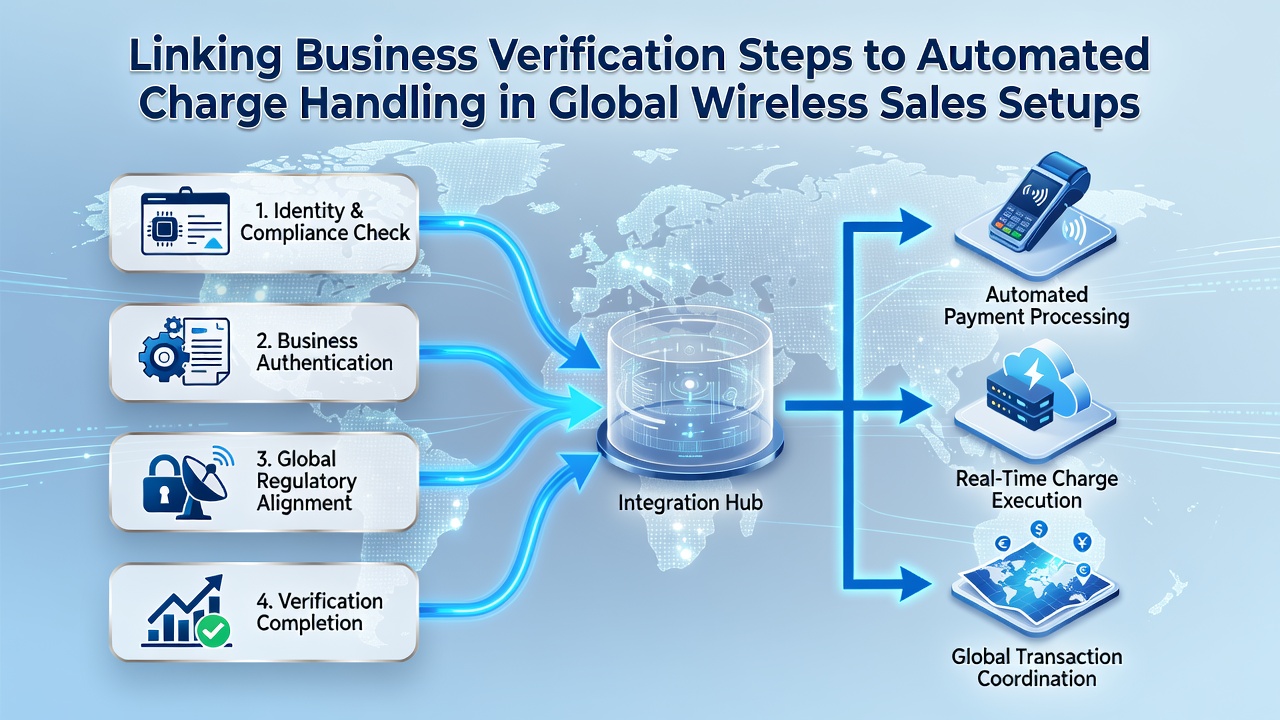
Business verification processes connect directly to automated charge systems in wireless sales environments that span multiple countries and currencies, where operators link account establishment sequences with recurring billing cycles on portable devices. Data shows that organizations completing verification before activating charge automation experience fewer interruptions in transaction flows across borders, according to reports from the PCI Security Standards Council. Those who've examined these setups note that verification steps such as document submission, identity confirmation, and risk scoring feed into the parameters that control automated billing, while wireless terminals handle the actual capture and transmission of charges in real time.
Core Verification Components in Wireless Networks
Verification begins wth collection of business registration details, tax identification numbers, and beneficial ownership records before any automated charge handling activates. Processors require these elements to establish baseline rules for transaction limits, currency conversion rates, and settlement schedules, and this data flows into the gateway configuration that manages recurring payments on mobile hardware. Research indicates that delays in verification often stall the automation layer, leaving terminals unable to process charges until compliance checks clear, whereas integrated platforms allow parallel progression where partial verification unlocks initial test transactions.
Observers note that global wireless sales setups frequently incorporate biometric or multi-factor checks during onboarding, which then map to authorization protocols during charge execution. In August 2026, several networks updated their verification APIs to include real-time cross-checks against international watchlists, directly influencing whether automated billing sequences proceed or require manual review. This linkage prevents mismatches between verified merchant profiles and the charge data submitted through wireless devices in different jurisdictions.
Automation of Charges Tied to Verified Profiles
Once verification completes, automated charge handling relies on stored parameters such as billing intervals, currency preferences, and fraud thresholds that originated from the verification phase. Wireless terminals pull these parameters during each transaction cycle, applying them to calculate amounts, apply taxes, and route funds without separate intervention. Studies found that systems enforcing this connection reduce processing errors by aligning verification outputs with charge logic, particularly when operating across regions with varying regulatory requirements.
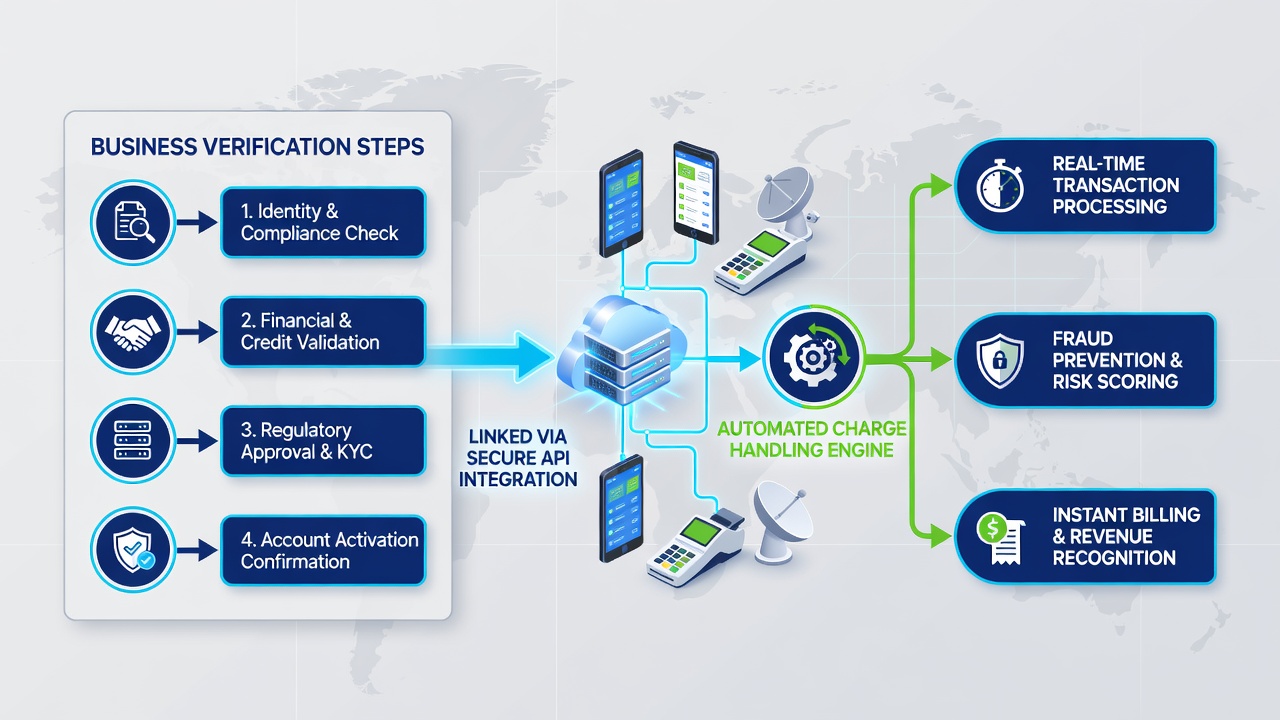
Take one operator who integrated verification data streams with billing engines for portable units in multiple markets. The setup allowed terminals to reference verified status before initiating recurring charges, resulting in smoother fund transfers and fewer declined authorizations during cross-border activity. Evidence suggests that this approach supports scalability, since new verification updates propagate automatically to active charge schedules without requiring manual reconfiguration of each device.
Regional Variations and Compliance Alignment
Different regions impose distinct verification timelines that affect automated charge activation in wireless environments. European frameworks emphasize strong customer authentication during verification, which then dictates the authentication level applied to subsequent automated charges, while North American standards focus more on documentation completeness before enabling recurring billing. Australian regulatory bodies have documented similar patterns where verification status determines eligibility for multi-currency automation on mobile terminals.
Those coordinating these systems often discover that synchronization between verification databases and charge handling software prevents compliance gaps during expansion. For instance, when a business adds a new market, updated verification records adjust charge parameters such as tax handling and settlement timing without disrupting ongoing wireless transactions. Data from industry reports shows measurable improvements in transaction success rates when these connections remain intact across borders.
Technical Pathways Between Verification and Charging
API endpoints serve as the bridge where verified business attributes transfer into charge automation rules on wireless platforms. Parameters like approved merchant category codes and risk scores populate the decision engines that govern recurring billing, allowing terminals to execute charges within predefined boundaries. Researchers discovered that encryption applied during verification carries forward to protect charge data in transit, maintaining continuity of security measures from onboarding through settlement.
One study revealed that platforms using unified data models for both processes handle updates more efficiently, such as when a business renews its verification documents and the change instantly reflects in active billing cycles. This reduces manual oversight and supports continuous operation of wireless sales setups in temporary or pop-up environments across jurisdictions.
Conclusion
Linking business verification steps to automated charge handling creates a continuous data flow that supports reliable wireless sales operations worldwide. The connection ensures that compliance elements established during onboarding directly shape how charges process on portable devices, adapting to regional rules while maintaining transaction integrity. Organizations maintaining this integration report consistent performance across multi-currency environments as verification and charging systems operate from shared records rather than isolated modules.