Ledger Alignment Protocols Linking Sales Logs to Fund Transfers for Vendors in Temporary Market Events Across Jurisdictions
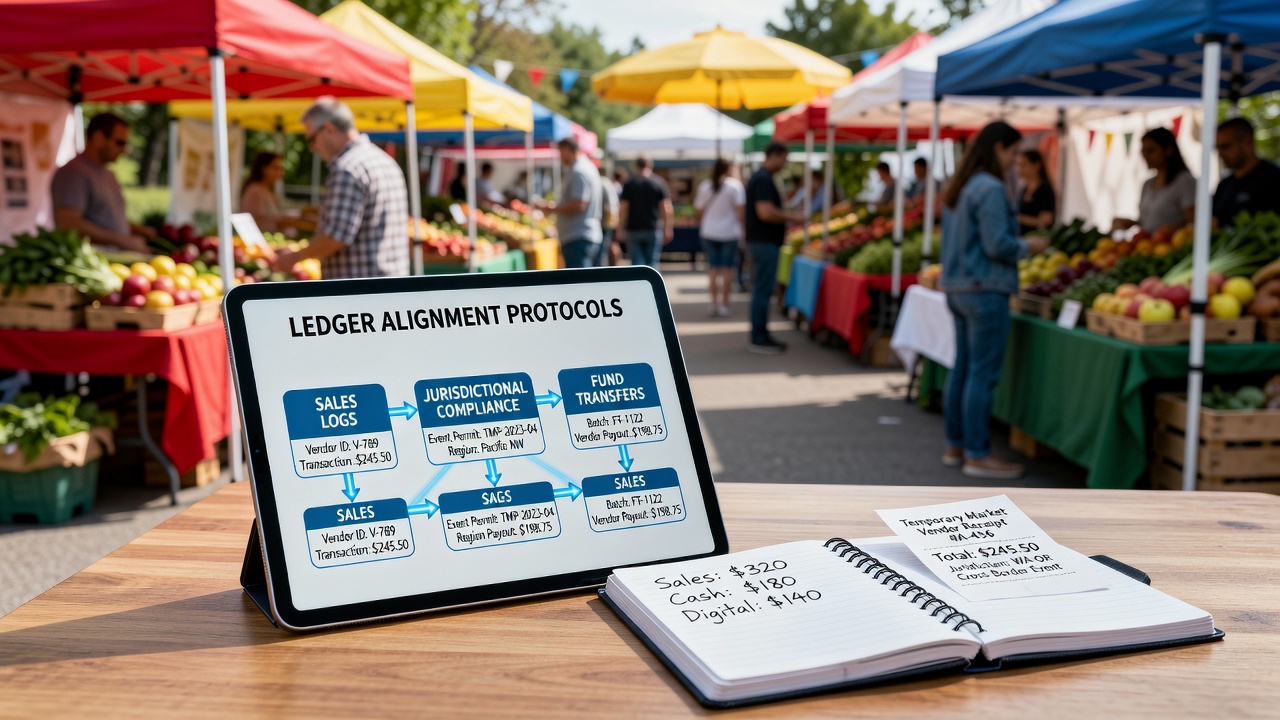
Temporary market events bring vendors together for short periods yet they operate under multiple regulatory frameworks when events span borders, and ledger alignment protocols address the need to connect detailed sales records directly to incoming fund transfers so discrepancies do not accumulate across regions. These protocols establish systematic matching procedures that tie each transaction entry in a vendor's sales log to the corresponding bank credit or payment processor settlement, and they operate through standardized data fields that include timestamps, amounts, currency codes, and jurisdiction identifiers.
Observers note that such alignment becomes essential when vendors move between events in different countries because tax authorities in each location require traceable records that demonstrate revenue sources and payment flows. Research indicates that mismatched entries often arise from timing differences in settlement cycles, and protocols incorporate reconciliation rules that flag variances exceeding predefined thresholds within hours rather than days. Data from payment networks shows that temporary vendors using automated alignment tools report fewer compliance queries during post-event audits, and the systems achieve this by generating unified reports that export in formats accepted by multiple regulatory bodies.
Core Components of Alignment Protocols
Protocols typically begin with the capture of sales data at the point of transaction through portable terminals that record item-level details alongside payment method and customer jurisdiction flags. The captured information then feeds into a central ledger module that applies mapping rules based on the vendor's registered locations, and these rules convert local tax identifiers and currency values into a common structure. Fund transfers arrive through processors that include reference codes matching the original sales batch, and the protocol engine compares these references against the stored logs to confirm completeness.
When events cross into new jurisdictions the protocol layer adds compliance checks that verify whether transfer amounts align with declared sales after accounting for local fees and currency conversion spreads. Studies from cross-border payment initiatives reveal that vendors participating in multi-country festivals encounter settlement delays averaging two to four business days, and alignment systems mitigate this by maintaining pending status indicators until final confirmation arrives from each region's banking network.
Handling Jurisdictional Variations in Temporary Settings
Each jurisdiction maintains distinct requirements for record retention and reporting frequency, so protocols incorporate configurable parameters that adjust matching logic according to the event location. For instance, some regions mandate daily reconciliation reports while others accept aggregated weekly summaries, and the protocol software switches between these modes automatically based on geolocation data collected from vendor devices. Temporary market organizers supply standardized event codes that vendors embed in their transaction records, which enables downstream systems to route reconciliation outputs to the appropriate oversight agencies without manual intervention.
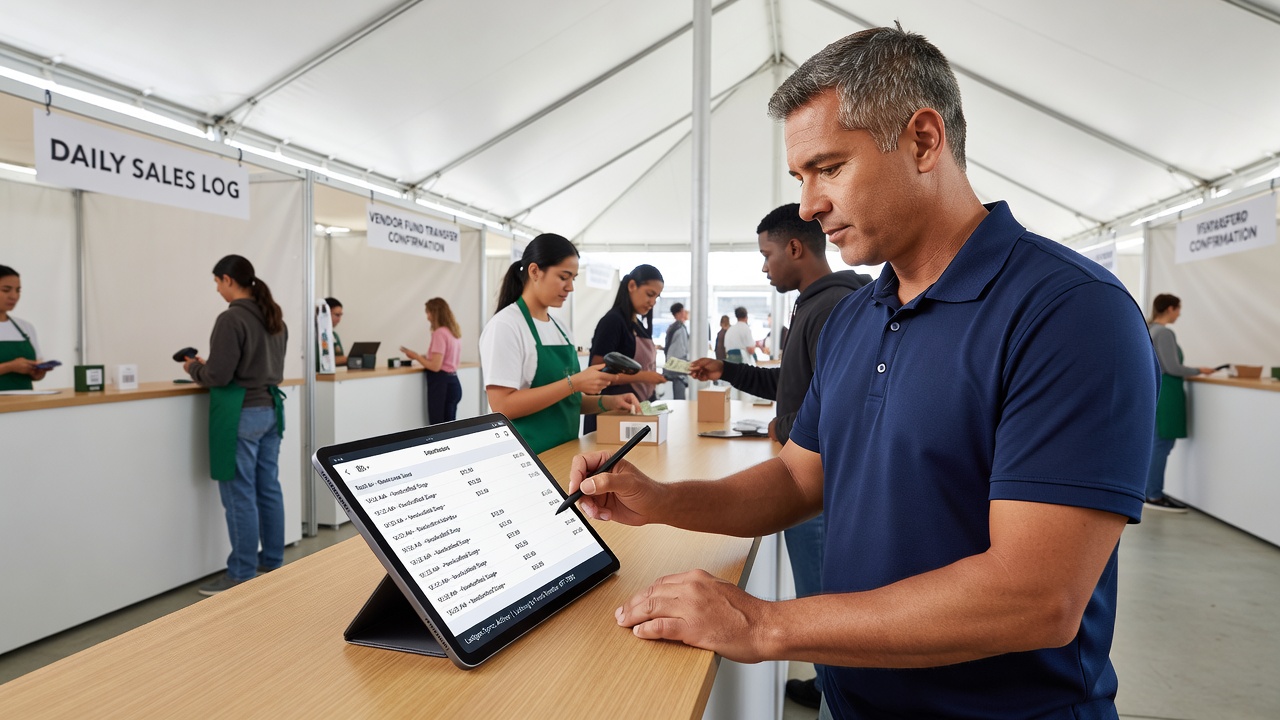
Those who manage events spanning North America and Europe report that alignment protocols must accommodate both the reporting standards of the Federal Reserve and the transparency rules set by the European Central Bank, and integrated platforms handle these differences through modular rule sets updated quarterly. In June 2026 several international coordination meetings are scheduled to review updates to settlement messaging formats that could further streamline these cross-border alignments for seasonal vendors.
Technical Implementation and Data Flows
Implementation relies on application programming interfaces that connect point-of-sale applications directly to accounting ledgers and payment gateways, and these interfaces transmit encrypted payloads containing sales line items paired with expected settlement identifiers. The receiving systems apply hash-based verification to ensure no alterations occurred during transmission, while audit trails record every match attempt and any manual overrides performed by vendor staff. Industry reports highlight that vendors who adopt these integrated flows experience a measurable reduction in manual reconciliation hours, with some operations documenting savings equivalent to several staff days per event cycle.
Protocols also incorporate exception handling routines that categorize unmatched entries into types such as partial settlements, currency rounding differences, or delayed processor confirmations, and they generate prioritized task lists for vendors to address before the next market date. Research from academic centers studying payment infrastructure indicates that exception rates drop significantly once vendors standardize their terminal configurations across all participating jurisdictions.
Conclusion
Ledger alignment protocols continue to evolve as temporary market events expand across borders and vendors require reliable connections between sales documentation and received funds. These systems rely on structured data exchange, jurisdiction-specific rule engines, and automated verification steps that together maintain record integrity without requiring constant manual oversight. As new messaging standards emerge in 2026 the protocols stand positioned to incorporate those changes while preserving the core function of linking every logged sale to its corresponding transfer across regulatory environments.