How Merchant Account Approval Timelines Shape Launch Windows for Subscription Billing on Mobile Gateways in Regulated Cross-Border Markets
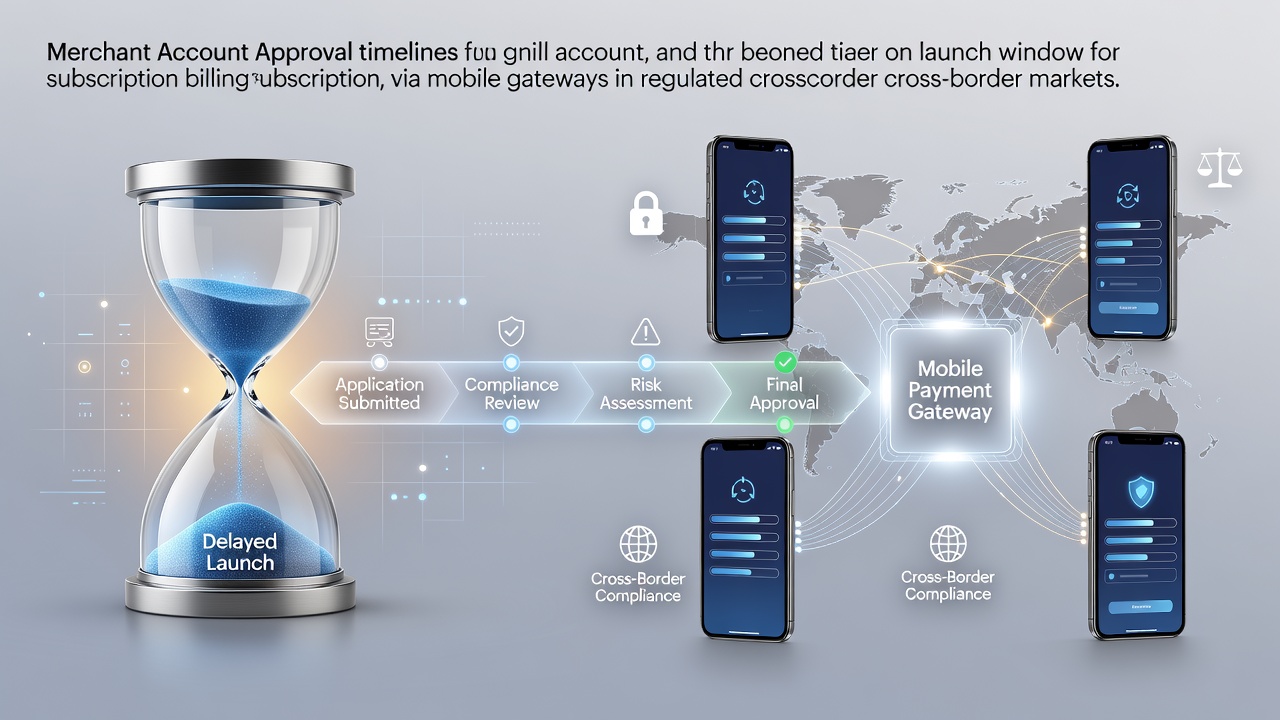
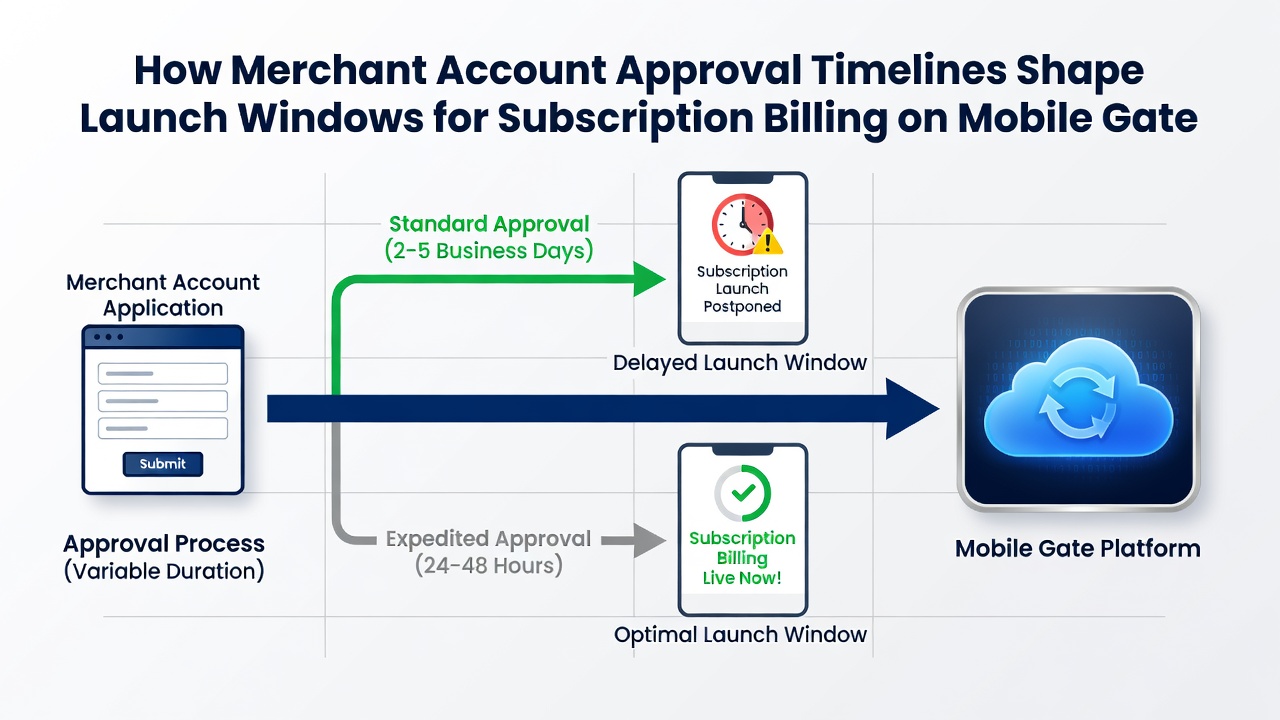
Merchant account approval timelines directly determine when subscription billing services can activate on mobile gateways in regulated cross-border markets, and companies planning launches must align these sequences with regulatory checkpoints that vary by jurisdiction. Data from payment processing networks shows approval periods ranging from 15 to 90 days depending on the market's compliance requirements, and this window often dictates whether a product reaches customers during peak seasonal demand or misses critical revenue cycles entirely.
Approval Processes and Their Sequential Dependencies
Regulators in multiple regions require detailed documentation on business models, financial projections, and risk assessments before granting merchant accounts that support recurring billing, while mobile gateways add layers of certification for device compatibility and transaction encryption. Observers note that delays compound when applications cross borders because each jurisdiction evaluates currency handling, tax reporting, and consumer protection standards independently; a single holdup in one market can cascade through the entire launch schedule.
Research from the Bank of Canada indicates that cross-border subscription providers experience average approval extensions of 25 days when documentation fails to address local data localization rules, and these extensions push product releases past optimal market entry points. Companies therefore build buffer periods into their planning, yet even with preparation the variability remains high because approval bodies prioritize different risk factors at different times.
Mobile Gateway Requirements in Regulated Environments
Mobile gateways must meet technical standards for handling recurring authorizations, token storage, and multi-currency settlements, and these certifications often run parallel to merchant account reviews rather than sequentially. The result is a compressed timeline where both processes compete for the same internal resources, and any mismatch between gateway readiness and account approval creates launch gaps that competitors can exploit.
Figures from industry reports reveal that 68 percent of subscription merchants in regulated markets adjust their go-live dates at least once due to gateway certification overlaps, and the adjustments frequently shift entire quarters of projected revenue. Those who've managed these launches repeatedly find that early coordination between legal teams handling account applications and technical teams managing gateway integrations reduces the frequency of such shifts.
Launch Window Pressures and July 2026 Regulatory Shifts
Effective July 2026, updated European payment directives introduce stricter requirements for recurring transaction disclosures, and these changes shorten the usable approval window for merchants targeting EU subscribers from mobile gateways. Providers who submit applications after March 2026 face the prospect of missing the summer launch cycle because the new rules extend review periods by an estimated 18 days on average.
Similar patterns appear in Asia-Pacific markets where Australian regulatory updates effective the same month require enhanced fraud monitoring protocols for subscription services, and these protocols must be demonstrated before merchant accounts receive final sign-off. The convergence of multiple regulatory calendars creates narrow launch corridors that only companies with pre-approved account structures can reliably meet.
Strategic Timing Across Jurisdictions
Merchants operating in multiple regulated markets stagger their account applications to create overlapping approval windows that align with a single global launch date, and this approach demands precise tracking of each jurisdiction's processing speeds. Data indicates that staggered submissions improve launch success rates by 34 percent compared with simultaneous filings, primarily because staggered timing allows teams to address issues in one market without derailing progress in others.
Gateway providers have responded by offering pre-certification programs that let merchants complete technical validations before submitting merchant account paperwork, and these programs shorten the combined timeline by up to 40 days in documented cases. The approach works best when merchants select gateway partners with established relationships in target regulatory zones because those relationships often accelerate the review of recurring billing configurations.
Conclusion
Merchant account approval timelines remain the primary constraint on launch windows for subscription billing through mobile gateways in regulated cross-border markets, and successful providers treat these timelines as fixed inputs rather than variables they can influence after submission. Organizations that map approval sequences against regulatory calendars and gateway certification requirements position themselves to capture revenue during the narrow windows that open each quarter. The pattern holds across jurisdictions because each additional compliance layer adds measurable days to the process without exception.