How Data Encryption Standards Influence Merchant Account Approval Times for New Businesses in the Hospitality Sector
Written by Ulrich Perry · Jul 30, 2026
How Data Encryption Standards Influence Merchant Account Approval Times for New Businesses in the Hospitality Sector
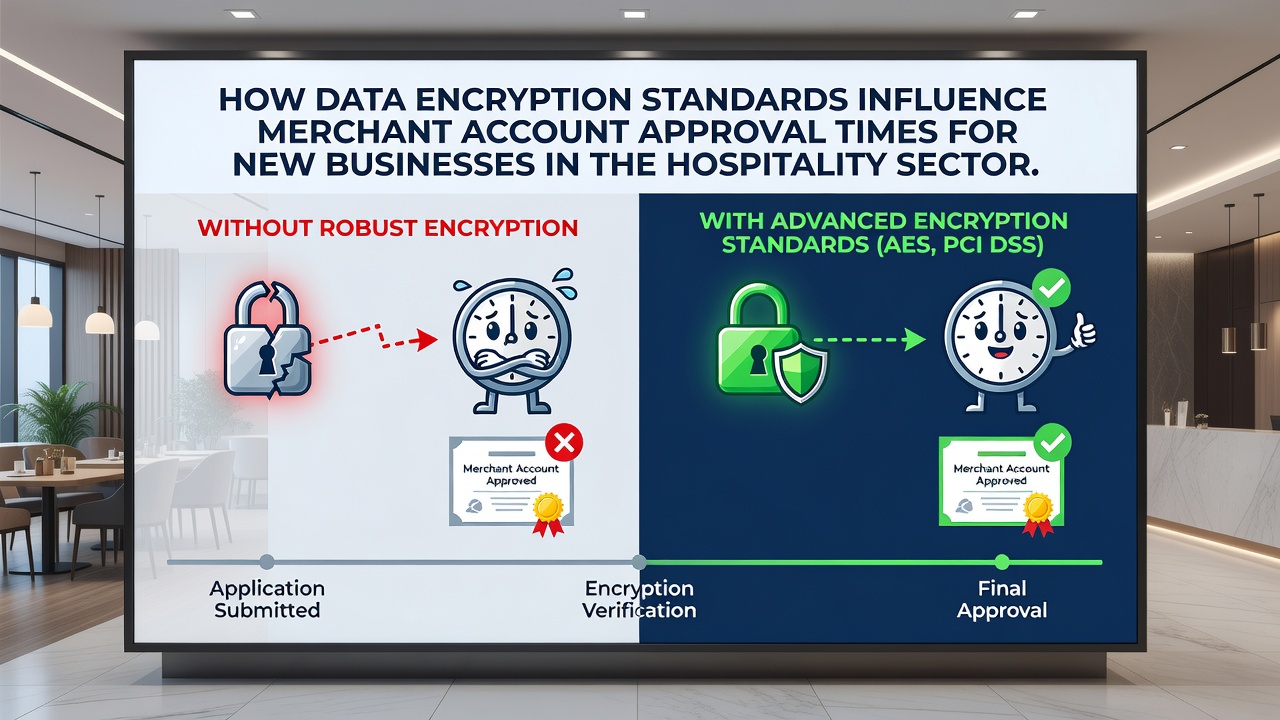
New hospitality ventures face layered security requirements when they apply for merchant accounts, and data encryption standards sit at the center of those reviews. Processors examine whether applicants meet protocols such as AES-256 for stored cardholder data and TLS 1.3 for transmission channels, because these measures reduce exposure during high-volume transactions at restaurants, hotels, and event venues. When encryption configurations align with industry benchmarks, approval cycles shorten, whereas gaps in key management or certificate handling extend verification steps and trigger additional documentation requests.
Core Encryption Requirements in Payment Processing
Payment processors evaluate encryption strength alongside other security controls before they extend account privileges. The Payment Card Industry Data Security Standard outlines specific encryption methods that merchants must apply to card data at rest and in transit, and underwriters cross-check implementation details during the onboarding sequence. Hospitality operators who present evidence of properly configured algorithms and regular key rotation schedules move through initial screening more quickly, because reviewers spend less time requesting clarification on data handling practices.
Studies from research institutions show that businesses using outdated protocols encounter repeated follow-up questions about vulnerability remediation plans. In contrast, applicants who already employ current standards such as those referenced in NIST Special Publication 800-38D complete security questionnaires with fewer revisions, allowing underwriting teams to advance to financial and operational checks without delay.
Approval Workflow and Encryption Verification Steps
Merchant account applications for hospitality businesses follow a defined sequence of compliance, credit, and operational reviews. Encryption documentation enters the process early, often within the first ten business days after submission. Reviewers examine certificate chains, cipher suite configurations, and evidence of annual penetration testing that validates encryption effectiveness. Any discrepancy in these materials prompts requests for updated diagrams or third-party audit summaries, which extend the timeline by several weeks.
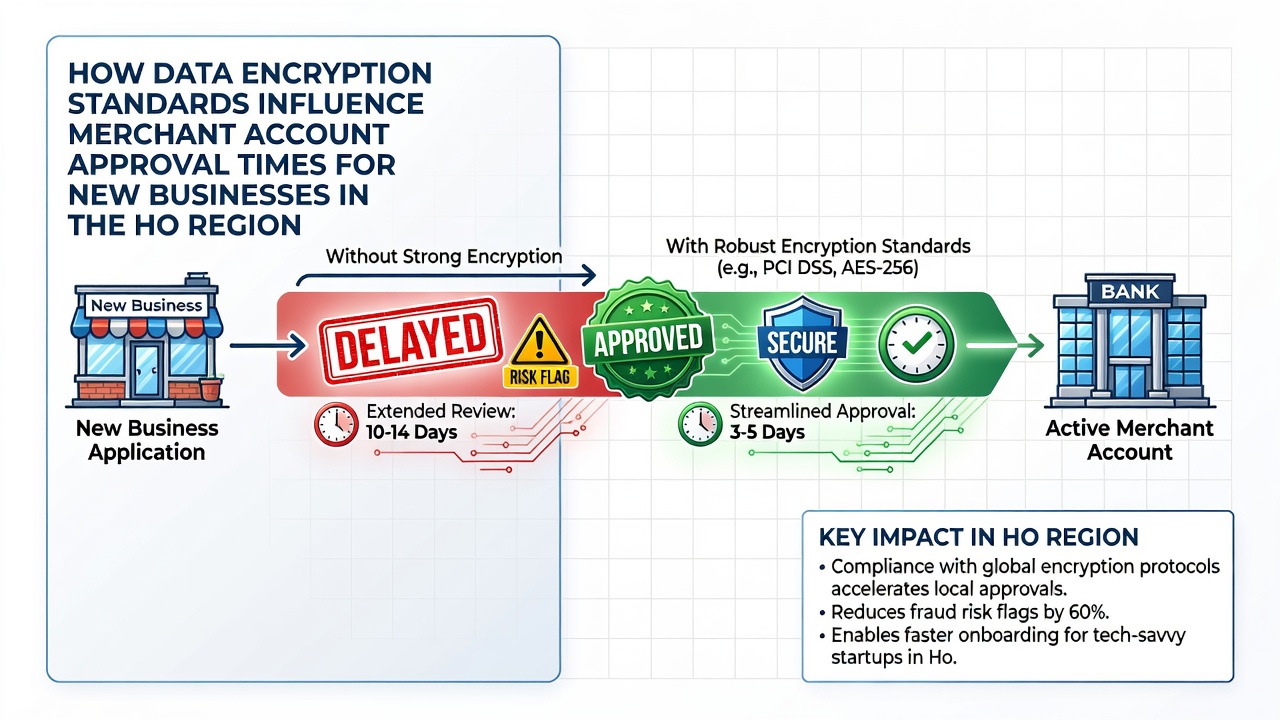
Figures from industry reports indicate that applications lacking clear encryption policy statements require an average of fourteen additional days for resolution. Those that include detailed logs of encryption key lifecycle management and evidence of automated certificate renewal processes advance to final approval without interruption. Observers note that July 2026 marks the scheduled enforcement date for updated cipher requirements under revised PCI guidelines, prompting many processors to accelerate their review criteria ahead of that deadline.
Hospitality-Specific Factors Affecting Timelines
Restaurants and lodging properties generate frequent card-present and card-not-present transactions, which increases scrutiny on encryption controls that protect data across multiple channels. New operators must demonstrate that point-of-sale systems encrypt data before it reaches the processor and that cloud-based reservation platforms apply equivalent protections. Processors often request architecture diagrams that map data flows through these systems, and incomplete diagrams lead to extended clarification periods.
Research indicates that multi-property hospitality groups encounter longer reviews when encryption standards differ across locations. Standardized policies that apply uniform AES implementations and centralized key management shorten the verification window, because processors can evaluate a single framework rather than multiple variants. Data from regulatory filings reveal that businesses submitting unified compliance packages reduce their average approval time by approximately twenty percent compared with fragmented submissions.
External Influences and Regulatory Updates
Changes in global encryption expectations affect how quickly new hospitality merchants receive account approvals. European Central Bank guidance on cryptographic algorithms for payment systems encourages adoption of post-quantum resistant methods, and processors incorporate these expectations into their evaluation rubrics. Applicants who reference compliance with such regional standards alongside PCI requirements provide reviewers with broader assurance, which can streamline cross-border transaction enablement.
Academic analyses of merchant onboarding data show that encryption readiness correlates with faster progression through risk assessment stages. Hospitality startups that engage security consultants early in the application process submit more complete encryption evidence and encounter fewer iterative requests. This pattern holds across different regions, where processors adjust their timelines based on the clarity of submitted cryptographic policies rather than on business size alone.
Conclusion
Encryption standards shape merchant account approval durations for new hospitality businesses by determining how thoroughly processors must investigate data protection measures. Clear documentation of AES implementations, TLS configurations, and key management procedures reduces follow-up cycles and allows underwriting teams to focus on financial and operational criteria. As July 2026 approaches and updated cipher requirements take effect, applicants who align their systems with current benchmarks position themselves for more predictable approval timelines.