How Certification Sequences Shape Recurring Charge Reliability in Handheld Systems for Multinational Vendor Networks
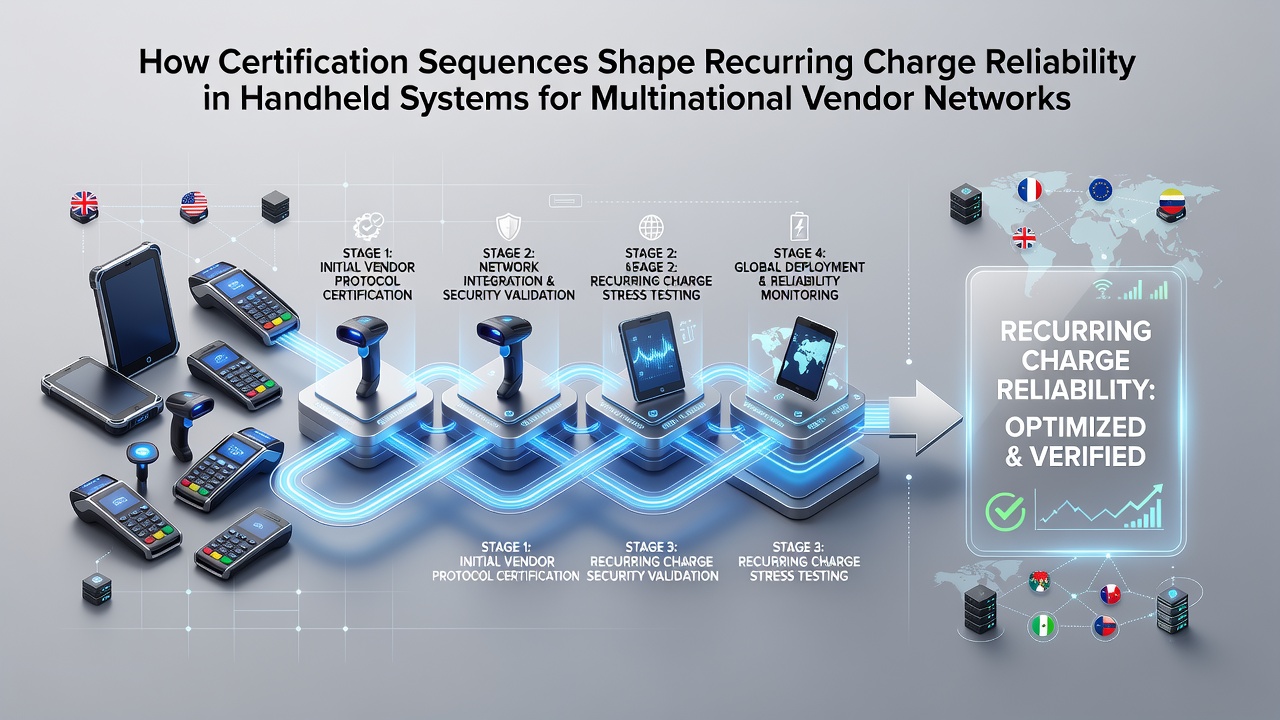
Certification sequences for handheld payment devices follow structured testing phases that include hardware validation, software compliance checks, and regional regulatory approvals before deployment in recurring billing environments. These sequences directly influence how reliably charges process across multiple currencies and jurisdictions because each approval stage verifies encryption standards, authorization protocols, and transaction logging requirements that recur with subscription cycles.
Observers note that handheld systems used by multinational vendors must complete EMVCo evaluations followed by PCI PTS assessments and then local central bank validations, creating a timeline where delays in one region affect charge success rates elsewhere. Research from payment industry reports shows that devices passing these sequences in sequence experience fewer authorization declines during monthly renewals because their firmware already incorporates the latest key rotation schedules and token handling rules.
Sequence Dependencies in Device Approval Processes
Certification sequences begin with laboratory testing of the handheld unit's secure element, move to interoperability trials with payment networks, and conclude with field trials under live transaction loads. Each stage builds on the previous one so that recurring charge functions, such as automated retries and dunning logic, operate without introducing new error codes that merchants must resolve manually. Data indicates that vendors who align their device rollout calendars with these sequences see improved charge reliability because terminal software receives simultaneous updates across borders rather than staggered patches that create temporary mismatches.
Multinational vendor networks often operate portable terminals in markets with differing data residency rules, which means certification bodies in one country require proof that transaction logs remain accessible for audit periods that exceed those mandated elsewhere. When sequences account for these variances early, the resulting firmware supports consistent recurring billing even when a vendor shifts inventory between regions mid-cycle.
Effects on Recurring Authorization Outcomes
Handheld systems certified through coordinated sequences maintain stable communication with acquirers because their approved configurations already include tested fallback paths for declined recurring transactions. Figures from 2025 network performance summaries reveal that terminals completing full certification before deployment record lower rates of soft declines linked to protocol mismatches during subscription renewals. Those who've studied these patterns observe that the sequence order matters: completing network-level testing before regional encryption audits prevents situations where a device passes local checks yet fails to handle token refreshes required for ongoing charges.

In July 2026, several certification bodies introduced updated test suites that incorporate real-time monitoring of recurring authorization flows, requiring vendors to demonstrate that their handheld units sustain charge success rates above defined thresholds across simulated multi-currency cycles. This addition to the sequence places new emphasis on logging and reporting capabilities that feed directly into merchant dashboards used for subscription management.
Cross-Regional Coordination Challenges
Vendors managing networks across continents face certification timelines that rarely align naturally, so they coordinate submissions through centralized compliance teams that track dependencies between EMV updates and PCI revisions. Evidence suggests that when these teams map certification milestones against recurring billing calendars, they reduce instances where a newly approved firmware version introduces changes that temporarily disrupt automated charge retries. According to resources published by the PCI Security Standards Council, devices that follow documented sequence guidelines demonstrate more predictable behavior during high-volume renewal periods because their security profiles remain consistent regardless of the merchant's operating region.
Another layer involves hardware refresh cycles that must coincide with encryption key rotations required by multiple authorities. When certification sequences incorporate these overlaps, portable units deployed in temporary market settings maintain the same reliability metrics as fixed-location terminals, allowing vendors to expand without rebuilding billing infrastructure for each new jurisdiction.
Practical Outcomes for Vendor Operations
Multinational setups using sequence-aligned certifications report fewer manual interventions during recurring charge windows because the devices already support standardized response codes across networks. Observers tracking these deployments note that alignment also simplifies vendor record-keeping since audit trails generated during certification serve as baseline documentation for later compliance reviews. Research indicates that the practice of front-loading regional validations within the overall sequence cuts the average time between device approval and first successful recurring transaction by several weeks in cross-border operations.
Those managing vendor fleets further benefit when certification bodies publish updated checklists that reference both hardware and recurring billing software requirements in one document, eliminating separate review tracks that previously extended deployment timelines. This integrated approach keeps handheld systems current with evolving network rules while preserving charge reliability across subscription models.
Conclusion
Certification sequences establish the foundation for recurring charge performance in handheld systems by enforcing layered validations that account for technical, security, and regional factors simultaneously. Multinational vendor networks that follow these ordered processes achieve more stable authorization results because their devices operate under configurations tested for sustained billing cycles rather than one-time transactions. As requirements continue to evolve, the structured nature of these sequences remains central to maintaining reliability across expanding global operations.