Exploring Biometric Verification Flows in Open-Air Vendor Networks for Streamlined Transaction Approvals During Large Public Gatherings
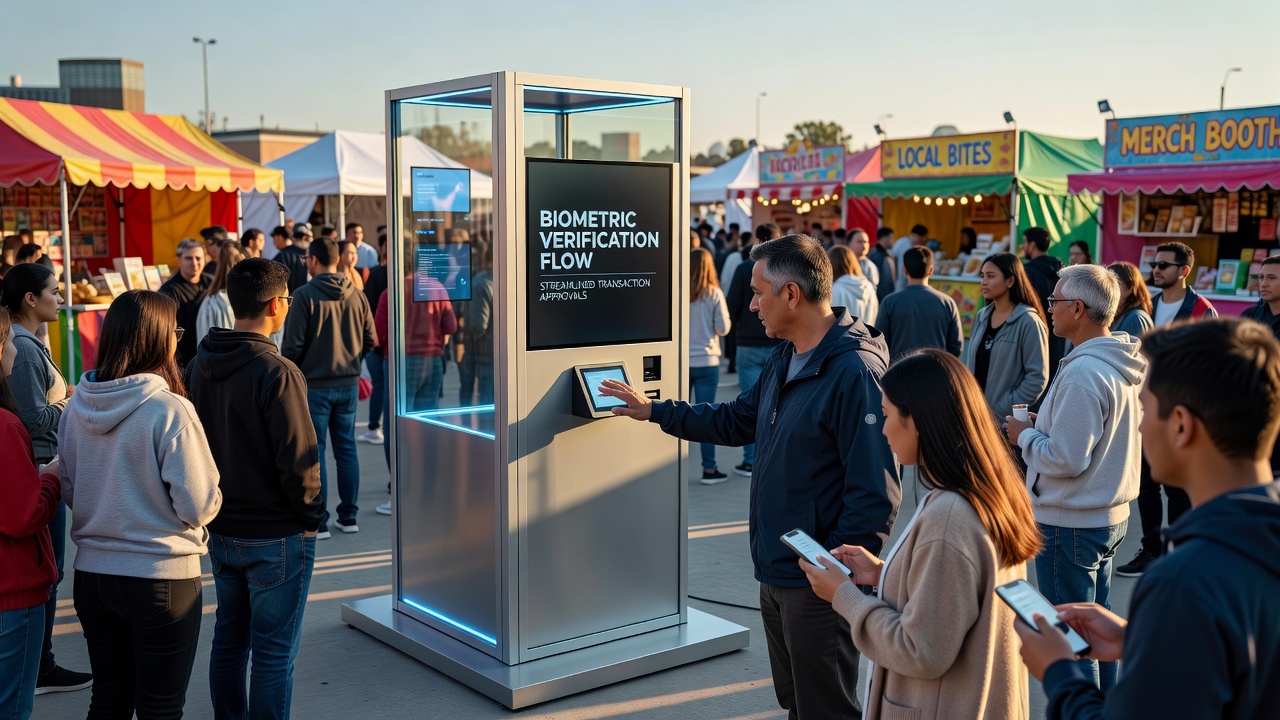
Biometric verification flows integrate fingerprint, facial, or iris recognition into portable payment terminals used by vendors operating in temporary outdoor locations such as festivals, markets, and sports events, and these systems connect directly to centralized authorization networks to reduce manual input during high-volume periods. Observers note that such setups allow transaction approvals to occur within seconds when attendees present their biometric data instead of cards or phones, which supports continuous service even when network connectivity fluctuates due to crowd density.
Core Components of Biometric Flows in Vendor Environments
Data from industry reports shows that a typical flow begins with device enrollment where a vendor registers a terminal through secure key exchange protocols, and then each transaction captures biometric samples that match against stored templates held in encrypted cloud repositories. Researchers have documented how edge computing nodes positioned near event perimeters process initial matches locally before forwarding confirmed data to payment gateways, and this layered approach maintains approval speeds under 3 seconds during peak hours.
According to figures from the National Institute of Standards and Technology, biometric accuracy rates in field conditions exceed 99.5 percent when multimodal checks combine facial and fingerprint inputs, and vendors apply these checks sequentially to minimize false rejections while complying with data minimization rules. The process continues with real-time logging that feeds into settlement systems, linking each approval to vendor accounts without requiring separate receipt printing.
Adaptation for Open-Air and Temporary Networks
Portable terminals equipped with biometric sensors operate on battery power and cellular fallback connections, allowing deployment across large grounds where fixed infrastructure remains unavailable, and studies indicate that solar-assisted charging extends operational windows through multi-day gatherings. Vendors coordinate these units through mesh networks that share verification loads, which prevents single-point overloads when thousands of simultaneous purchases occur at food stalls or merchandise counters.
Streamlining Approvals During Peak Attendance
Event organizers schedule biometric rollouts ahead of major dates, including preparations noted for June 2026 gatherings where attendance projections reach several hundred thousand daily visitors, and terminal fleets undergo pre-event certification to align encryption keys with regional payment schemes. This coordination enables approval rates to stay above 98 percent even as transaction volumes spike tenfold compared with standard retail days.
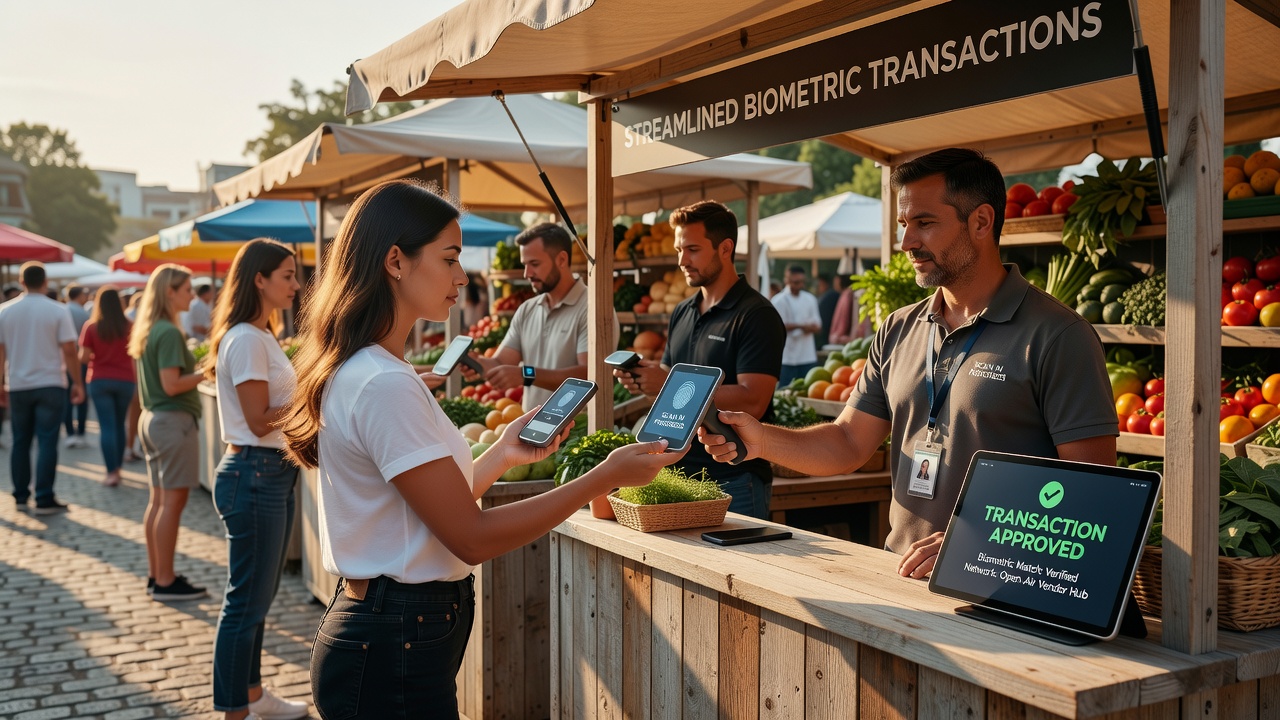
Transaction queues shorten because attendees bypass physical card handling, and data indicates average processing time drops by 40 percent when biometric options replace traditional methods. Payment processors route these flows through dedicated channels that prioritize low-latency paths, and vendors receive instant confirmation signals that update inventory systems automatically.
Security Protocols and Regulatory Alignment
Encryption standards applied at the sensor level prevent template extraction during transmission, while continuous monitoring flags anomalies such as repeated failed matches that could signal tampering attempts. European Central Bank documentation outlines how vendors must maintain audit trails for biometric transactions to satisfy cross-border data rules, and these logs support dispute resolution without exposing raw biometric information.
Training programs for temporary staff cover proper device positioning and consent prompts, ensuring each verification step displays clear instructions on portable screens before capture begins. Compliance checks occur through automated software updates pushed during off-peak hours, which keeps systems aligned with evolving standards across multiple jurisdictions.
Integration with Existing Payment Ecosystems
Biometric terminals interface with established point-of-sale software through standardized APIs that allow seamless addition to current vendor operations, and field tests reveal minimal disruption when existing card readers remain active as backup options. Settlement occurs through the same banking rails used for card transactions, which simplifies reconciliation for organizers managing multiple vendors.
Observers have noted successful deployments at music festivals where thousands of daily transactions flowed without interruption after initial calibration, and similar patterns appear in sports venues that adopt the technology for concession areas. The modular design supports quick scaling when additional terminals join the network mid-event based on real-time attendance data.
Conclusion
Biometric verification flows in open-air vendor networks demonstrate measurable improvements in transaction speed and operational continuity during large public gatherings by combining local processing with secure cloud matching. Implementation details continue to evolve around regulatory requirements and hardware portability, while data from sources such as the National Institute of Standards and Technology and the European Central Bank guides ongoing refinements in accuracy and privacy controls. These systems support vendor operations through structured enrollment, rapid approval sequences, and integrated logging that aligns with broader payment settlement processes.